What Happens When You Don’t Have a Drug Testing Policy

author-image
Intelligent Fingerprinting

For many HR teams, drug testing in the workplace is a sensitive subject. It sits at the intersection of safety, employee well-being, trust, and legal responsibility. As a result, it is often delayed, deprioritised, or addressed only briefly within broader health and safety documentation.

However, when an organisation lacks a clear workplace drug testing policy, the risk does not disappear. It simply becomes harder to manage and far harder to defend.

A single impairment-related incident can result in significant fines, extended legal inquiries, and long-term operational disruption. One unfit driver or one moment of impaired judgment can put lives at risk and expose the organisation to serious legal and financial consequences.

When incidents occur, regulators ask a simple question: What did the employer do to prevent this?

For organisations that are not currently conducting employee drug testing, this question can be particularly difficult to answer.

Why the Absence of a Policy Creates Risk for HR

The absence of incidents is often mistaken for the absence of risk. Without workplace drug screening, employers simply have less visibility and fewer defensible controls.

HR is typically responsible for drafting policies, advising managers, overseeing employee relations, and ensuring consistency across the organisation. When no workplace drug testing policy exists, HR is left exposed and expected to justify decisions that were never formally defined.

Without a documented framework, HR teams may struggle to answer fundamental questions, including:

  • When do we conduct drug and alcohol testing?
  • Who is tested and under what circumstances?
  • How would the results be recorded and handled?
  • How will we handle a non-negative result?

A lack of policy increases the likelihood of inconsistent treatment, employee grievances, and legal challenges.

From a regulatory perspective, doing nothing is rarely viewed as a defensible position.

Legal & Financial Consequences of Policy Failure

UK employers have a legal duty to take reasonably practicable steps to protect employees, contractors, and the public from harm. This includes managing foreseeable impairment risks.

When an impairment-related incident occurs, and no workplace drug testing policy exists, regulators assess whether the employer identified those risks and implemented appropriate controls. If the organisation cannot demonstrate this, it may be found in breach of its legal duties.

Financial penalties under health and safety sentencing guidelines are based on turnover and culpability, not intent. Even a single incident can result in substantial fines, alongside:

  • Health and Safety Executive investigations
  • Improvement or prohibition notices
  • Scrutiny from licensing bodies or traffic commissioners
  • Insurance complications or increased premiums
  • Reputational damage affecting recruitment and retention

For HR, this often means prolonged investigations, internal disruption, and difficult conversations with senior leadership.

In Ball v First Essex Buses Limited, an Employment Tribunal found that a long-serving employee had been unfairly dismissed following a non-negative workplace drug test, not because drug testing itself was unlawful, but because the employer failed to apply its own policy consistently and fairly. This led to an employee grievance and a successful legal challenge, reinforcing a critical lesson for HR leaders: having a drug testing policy is not enough; it must be clear, followed in practice, and applied consistently to remain legally defensible.

Safety Always Comes First

One of the most persistent misconceptions about workplace drug and alcohol testing is that it signals a problem with drugs in the organisation or exists to discipline employees.

In reality, drug testing is a preventative safety measure, not an admission of wrongdoing. Organisations do not introduce seatbelts, safety equipment, or fatigue policies because people are failing; they introduce them because risk exists, and the consequences of failure can be severe.

From an HR perspective, drug testing serves to prevent, ensure fairness, and support governance. Ideally, potential impairment risks are managed before harm occurs, rather than reacting after an incident. When no framework exists, HR is often forced into reactive enforcement, which increases legal exposure, damages trust, and places managers in difficult positions.

A clear, well-designed approach allows HR to shift the conversation away from punishment and toward fitness for duty, safety, and risk management. In practice, this means ensuring that policies are lawful, proportionate, and clearly communicated, that managers understand how to respond consistently and appropriately, and that employees understand both their responsibilities and their rights. It also means documenting decisions so they are transparent and defensible if challenged.

When positioned correctly, workplace drug testing becomes a visible sign of a mature, prevention-led organisation. It demonstrates that the business is committed to protecting its people and the public, not policing behaviour or assuming misconduct.

Implementing a Defensible Workplace Drug Testing Framework

Introducing workplace drug testing is not just about selecting a test or drafting a policy. For HR teams, much of the work lies in introducing the concept to the organisation in the first place.

A considered approach begins by defining purpose, identifying impairment-related risks, and aligning drug testing with existing health and safety and duty-of-care obligations. HR leads this process by engaging stakeholders early, including unions or employee representatives, ensuring teams understand legal and data protection requirements, and selecting testing methods that protect dignity and fairness.

Education plays a critical role. Managers must apply policies consistently and lawfully, while employees need clear, accessible information about when testing may occur and why.

When organisations introduce workplace drug testing transparently and proportionately, with a clear focus on fitness for duty and prevention, employees are far more likely to accept it as a safety measure rather than resist it as a control.

To learn more, read our White Paper: HR Guide to Workplace Drug Testing.

Modern Workplace Drug Testing

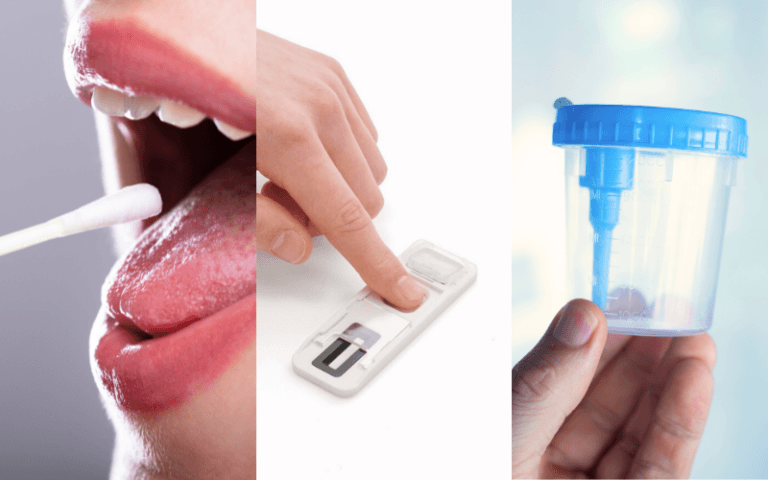
Historically, organisations relied on workplace drug testing methods such as urine and mouth swab (saliva) testing. Although widely used, both methods create practical challenges in employment and safety-critical environments. Urine testing often feels intrusive and requires controlled facilities and supervised collection, which disrupts operations and raises privacy and dignity concerns. Mouth swab testing reduces invasiveness but still involves close contact, hygiene considerations, and inconsistent sample quality.

These challenges also raise questions about relevance and proportionality. As Phil Crawford, Health, Safety and Quality Manager at Precision Stevedores, explains, traditional testing panels often go beyond what is necessary to manage real risk.

“When we were testing with urine, the test was checking for twelve or sixteen different drugs. But four or five of the same drugs were coming up all the time.”

This experience prompted a more considered, risk-based approach to workplace drug screening.

“It is risk based more than anything else. Do we need to test for a particular drug that we have never seen in ten years of testing?”

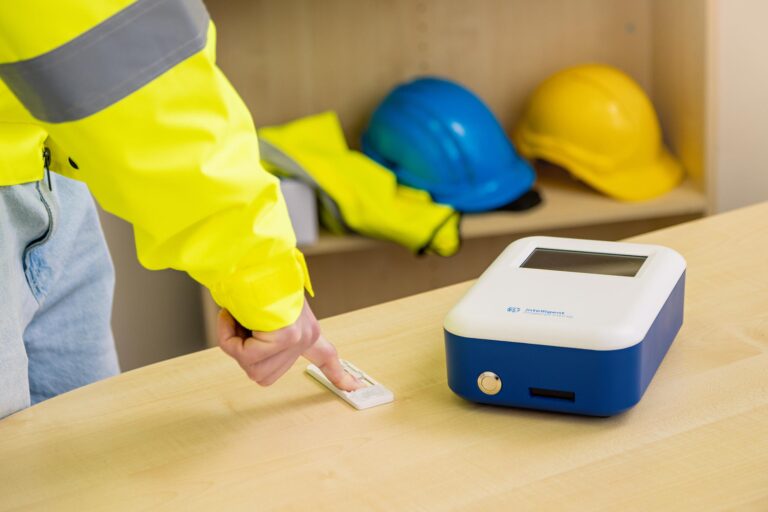
Fingerprint drug testing addresses these operational and risk-based challenges directly. Instead of relying on urine or saliva samples, Intelligent Fingerprinting uses a non-invasive drug test that analyses naturally occurring sweat from the fingertips, removing the need for specialist facilities, supervised collection, or the handling of bodily fluids.

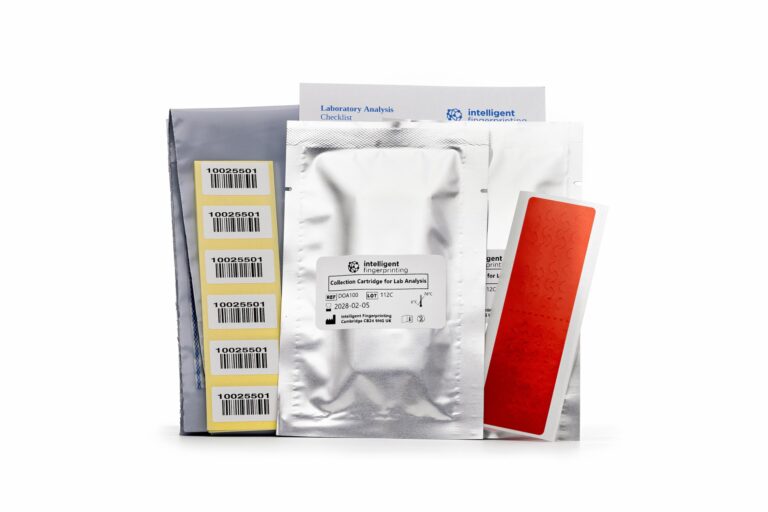
The process is simple and efficient. A single-use cartridge collects a small sweat sample from the fingertip, which a portable reader then analyses on site. Employers can carry out testing discreetly within normal working environments, without pulling employees away from operations for extended periods.

Results are available within minutes and focus on recent drug use rather than historical consumption. This makes fingerprint drug testing particularly well-suited to fitness-for-duty decisions, helping employers identify current impairment risk while preserving employee dignity, trust, and proportionality in their drug testing approach.

Final Thought for HR Leaders

For HR leaders, the question is not whether workplace drug testing feels uncomfortable. The question is whether the organisation can confidently explain, with evidence, what it has done to prevent impairment-related harm.

A clear workplace drug testing policy, owned and implemented by HR and supported by a fair, non-invasive testing method, protects employees, supports managers, and gives the organisation a defensible position when it matters most.

Download our white paper for more detailed guidance on creating a compliant and effective drug testing programme, or schedule a demo to see how Intelligent Fingerprinting can streamline your workplace drug testing process.

The UK Road Safety Strategy 2026: What It Means for Employers Managing Drug Driving Risk

author-image
Intelligent Fingerprinting

This article outlines key enforcement priorities from the Road Safety Strategy and what employers must do now to address impairment risks for staff who drive for work.

In January 2026, the UK Government released its first comprehensive Road Safety Strategy in over a decade, setting a national target to cut road deaths and serious injuries in Great Britain by 65 percent.

Heidi Alexander, Secretary of State for Transport, stated:

“While England has some of the safest roads globally, approximately four people die on them each day – with thousands more seriously injured every year. Ask yourselves: would we tolerate this on our railways, or in the skies? Of course not. But over the past decade, a dangerous complacency has taken hold, as if road deaths are inevitable. I’ll never accept that”

The strategy spans vehicle safety technology, infrastructure design, enforcement, education, and data systems. However, one message is unmistakable. Dangerous driver behaviour, including drink and drug driving, remains central to road casualties.

Employers in logistics, construction, utilities, engineering, manufacturing, transport, or field services should review their driving risk controls. The Road Safety Strategy directly affects workplace policies, making it critical for teams to assess and manage impairment risks.

The strategy highlights that in 2024, there were more than 1,600 road deaths and nearly 28,000 serious injuries in Great Britain, equating to approximately four deaths per day. While the UK previously made substantial progress in reducing fatalities, progress has plateaued compared with some European countries. The Government’s position is clear. Stronger systemic action is required.

Among the behavioural risks identified are speeding, distraction, seat belt non-compliance, and drink and drug driving, often referred to as part of the Fatal Four.

Impaired Driving is Explicitly in Focus

Under Theme 4, Robust enforcement to protect all road users, the Government confirms that enforcement remains a central pillar of road safety policy. Infrastructure, education, and vehicle innovation all play important roles, but enforcement ensures that road safety regulations are respected and that dangerous behaviour carries consequences.

The Government has launched a consultation to modernise the motoring offences framework, which has not been substantially updated since the Road Traffic Act 1988 and the Road Traffic Offenders Act 1988. The consultation aims to ensure penalties reflect the harm caused and act as an effective deterrent.

Within this review, drink and drug driving are priority areas.

The Government is consulting on:

  • Taking tougher action on drink driving by lowering the drink drive limit in England and Wales, including introducing a lower limit for novice drivers. The current limit is among the highest in Europe and has not changed since 1969.
  • Reviewing penalties and mandatory training for drink and drug driving offences, including consulting on the use of alcohol interlock devices.
  • Introducing new powers to suspend driving licences earlier for individuals suspected of drink or drug driving while awaiting court proceedings or forensic results.
  • Exploring alternative methods for drug driving evidence collection and processing to improve speed and robustness.

The strategy states clearly that driving under the influence of drink or drugs is unacceptable and puts other road users at risk. It also recognises that delays in forensic analysis can allow suspected offenders to continue driving while investigations are ongoing. Proposed licence suspension powers aim to address this gap.

The focus on drug driving evidence collection is particularly significant. The strategy acknowledges that alternative matrices and future technologies may enable faster, more flexible enforcement outcomes. This reflects openness to evolving scientific approaches to drug detection.

This builds on the existing drug driving framework under Section 5A of the Road Traffic Act 1988, introduced in 2015, which established specified blood concentration limits for certain controlled drugs.

Taken together, these proposals reflect a clear intention to modernise enforcement, strengthen deterrence, and remove impaired drivers from the road more swiftly. Enforcement of drink and drug driving is expected to become more proactive, technologically enabled, and visible.

As enforcement becomes faster and more visible, employers will face greater scrutiny after incidents involving work-related driving.

This means employers should ensure robust controls to prevent drug and alcohol-related risks among staff who drive for work. Action should include reviewing policies, training managers, and conducting risk-based testing rather than waiting for criminal enforcement.

Driving for Work is a Workplace Risk

Driving for work is one of the most significant work-related hazards in the UK.

The Road Safety Strategy 2026 states:

“Collisions involving people travelling for work account for a significant share of road deaths and serious injuries. It is estimated that approximately 1 in 3 of all road traffic fatalities UK-wide involve someone who is driving or riding for work.”

This statistic reframes occupational driving as a mainstream safety issue rather than a peripheral transport concern. The strategy also confirms that employers and engagers of anyone driving or riding for work must ensure those individuals are as safe as possible on the roads.

This applies across a wide range of transport modes, including:

  • Heavy Goods Vehicles
  • Light Goods Vehicles
  • Cars
  • Motorcycles
  • E cycles and cycles

The strategy also acknowledges the rapid growth of deliveries in the gig economy, reinforcing the fact that work-related road risk continues to expand.

A National Work-Related Road Safety Charter

The Government will pilot a National Work-Related Road Safety Charter for businesses that require people to drive or ride for them.

The Charter aims to reduce work-related road risk, improve safety outcomes, promote organisational accountability, and encourage good practice across industries. The pilot will run for two years and will be monitored and evaluated. The strategy states:

“Regulatory measures will be considered if voluntary engagement is insufficient in reducing work-related road risk.”

This shows that the Government may move beyond voluntary guidance if industry engagement does not deliver measurable improvement.

The Charter will draw on existing schemes such as:

The trajectory is clear: employer accountability for managing road risk is increasing.

Employer Duty of Care Remains Central

The Health and Safety Executive confirms that employers have responsibilities when employees drive for work. Employers must manage driving for work in the same structured way as any other workplace hazard, through risk assessment and control.

This duty applies to:

  • Fleet drivers
  • Engineers travelling between sites
  • Construction supervisors
  • Utilities and infrastructure workers
  • Sales representatives
  • Grey fleet drivers using personal vehicles

Driving for work includes any employee using a vehicle as part of their role.

A defensible drug and alcohol framework typically includes:

What This Means for Employers

The Road Safety Strategy places drug and alcohol impairment at the centre of national road safety reform. The Government is modernising the motoring offences framework, strengthening penalties, reviewing evidence processes, and introducing faster enforcement powers.

For employers whose staff drive for work, this creates a shift in responsibility.

Criminal enforcement occurs after harm has happened. Workplace safety management focuses on preventing harm in the first place. Impairment risk forms part of occupational road risk and requires structured control.

Workplace drug testing does not duplicate police roadside enforcement. It supports risk management by helping organisations to:

  • Deter unsafe behaviour
  • Identify potential impairment before harm occurs
  • Demonstrate proactive compliance
  • Reinforce a safety culture in safety-critical roles

In logistics, construction, utilities, transport, manufacturing, and engineering, driving often sits alongside other high-risk activities. An impaired driver may also operate heavy equipment, work at height, supervise teams, or interact with the public.

Regulators will examine not only whether an individual broke the law, but whether the employer took reasonable and proportionate steps to manage foreseeable risk.

For many organisations, this includes reviewing whether a structured, legally compliant workplace drug-testing programme is appropriate for roles that involve driving for work.

Fingerprint Drug Testing and the Evolution of Workplace Controls

The strategy’s commitment to exploring alternative methods for collecting drug driving evidence reflects a broader shift towards modernisation in drug detection. Employers are also modernising workplace testing methods to reduce disruption and support proportionality.

The Intelligent Fingerprinting Drug Screening System uses sweat collected from fingertips to detect recent drug use. The process is non-invasive, does not require the collection of bodily fluids, and delivers results in minutes.

In safety-critical environments, this provides practical advantages:

  • Rapid on-site screening with minimal disruption
  • No requirement for dedicated bathroom facilities
  • Reduced handling of biological samples
  • A detection window aligned to recent use rather than historic lifestyle

Any testing programme must remain lawful, proportionate, and transparently communicated. The Intelligent Fingerprinting Drug Screening System strengthens a structured occupational road risk strategy. It does not replace policy, risk assessment, or managerial oversight.

Learn more about the Intelligent Fingerprinting Drug Screening System and employer resources here.

https://www.intelligentfingerprinting.com/news-resources/

Preparing for a More Proactive Enforcement Environment

The Road Safety Strategy 2026 signals intent. The Government has committed to modernising offences, strengthening penalties, accelerating processes, and removing impaired drivers from the road more swiftly.

A significant proportion of road fatalities involve people travelling for work. Employer accountability will increase.

Organisations whose staff drive for work should now:

  • Review driving for work risk assessments
  • Revisit drug and alcohol policies
  • Identify safety-critical driving roles
  • Confirm that testing approaches are lawful and proportionate

Waiting for a serious incident is not a risk management strategy.

A clear, structured, and defensible drug and alcohol policy demonstrates leadership and protects your workforce.

If you are reviewing your approach to managing impairment risk, contact Intelligent Fingerprinting to arrange a demonstration of the Intelligent Fingerprinting Drug Screening System and discuss how it could support your occupational road risk framework. Request a demo to understand how fingerprint testing could fit within your existing policy, testing circumstances, and data handling requirements.

Preparing now ensures you are ready for what comes next.

Key GDPR Principles for Workplace Drug Testing

author-image
Intelligent Fingerprinting

What is GDPR & Why is it Important?  

The General Data Protection Regulation (GDPR) establishes comprehensive privacy and security rules across the European Union. It governs how organisations collect, store, and manage personal data, ensuring individuals’ privacy rights remain protected. Since 2018, GDPR has become the global benchmark for data protection as organisations worldwide adopt its principles.

GDPR empowers individuals to have more control over their personal data. It ensures that businesses handle sensitive information responsibly, transparently, and securely. For organisations that conduct workplace drug testing, GDPR is especially crucial because test results are considered special category personal data, making compliance an absolute necessity.  

What Happens When You Don’t Follow GDPR?  

Failing to comply with GDPR can lead to serious consequences, including hefty fines and legal penalties. Non-compliance can result in fines of up to €20 million or 4% of the annual global turnover, whichever is higher. Beyond financial penalties, improper handling of personal data can damage an organisation’s reputation, erode employee trust, and result in legal disputes.  

When it comes to workplace drug testing, mishandling personal data can have even more far-reaching implications. Not only could an organisation face regulatory scrutiny, but it could also open the door to legal challenges from employees claiming their data has been misused, stored improperly, or accessed by unauthorised individuals.  

Case Study: Capita Fined £14 Million for UK GDPR Failings  

In October 2025, the UK Information Commissioner’s Office (ICO) imposed a £14 million fine on Capita PLC and Capita Pension Solutions Ltd for breaching key provisions of the UK General Data Protection Regulation following a major cyber‑attack that exposed the personal data of millions of people. The ICO found that Capita failed to implement appropriate technical and organisational measures to protect personal data, as required by Articles 5(1)(f) and 32 of the UK GDPR.  

The incident highlighted systemic failures in security and risk management, leaving highly sensitive data vulnerable to unauthorised access. According to the ICO’s monetary penalty notice, Capita “failed to ensure the secure processing of personal data.”

Why This Matters for Workplace Drug Testing 

Workplace drug testing involves processing special category personal data (such as health‑related information). This case demonstrates that UK regulators treat failures to protect such data seriously, imposing significant penalties where organisations do not take robust measures to safeguard personal information. Employers implementing drug testing programmes must therefore prioritise GDPR compliance, secure data handling, and appropriate organisational safeguards to minimise legal and reputational risk.  

Workplace Drug Testing & Its Relation to GDPR  

Workplace drug testing requires organisations to collect, process, and store highly sensitive personal data, including drug test results. GDPR classifies these results as special category data, which demands additional safeguards to protect employee privacy. When organisations carry out drug testing, they must establish a lawful basis for processing, obtain explicit consent where required, and apply strict controls to how authorised personnel store and access results.

Here’s where the GDPR principles specifically come into play:  

  • Lawful Basis for Processing: Employers must have a clear legal basis to process employee data for drug testing, such as compliance with a legal obligation or the protection of the employee’s and others’ vital interests.   
  • Transparency: Employees must be fully informed about how their data will be used, why it is being collected, and how long it will be retained.  
  • Data Minimisation: Employers should collect only the data necessary for the drug test and avoid collecting excessive information.  
  • Security: Drug test results must be securely stored and accessible only by authorised personnel.  
  • Retention: Data should not be kept longer than necessary, and results should be deleted or anonymised once they are no longer needed.  

Practical Steps to Ensure Proper GDPR Compliance  

To ensure proper compliance with GDPR when conducting workplace drug testing, organisations should take the following practical steps:  

  • Obtain Explicit Consent 
    Before testing, employers must obtain employees’ explicit consent. This consent should be documented and cover the purpose of the test, how the data will be handled, and the potential consequences of the test results.  
  • Use Anonymised Data Wherever Possible 
    Where feasible, anonymise the data by using a unique Donor ID instead of employees’ full names. This helps protect employee privacy while still allowing for tracking and record-keeping.  
  • Implement Secure Storage Systems 
    Test results must be stored in secure systems with restricted access. Password protection and encryption are essential measures to prevent unauthorised access to data.  
  • Minimise Data Collection 
    Only collect data that is absolutely necessary. For example, the test should capture only the tested drug panel and its results, avoiding any unnecessary personal information.  
  • Define Clear Data Retention Periods 
    Establish clear retention periods for drug test results. For example, negative results may be retained for a shorter period (e.g., 6-12 months), while positive results may need to be kept longer due to legal or disciplinary requirements.  
  • Educate Employees & HR Teams 
    Training is key. Ensure that both HR personnel and employees understand the importance of GDPR compliance and how personal data will be handled. This will build trust and ensure transparency in the process.  

Best Drug Testing Method for GDPR Compliance  

Fingerprint drug testing is a non-invasive method that uses naturally occurring sweat from the fingertips to detect drugs of abuse. This approach not only respects employee privacy but also ensures complete compliance with GDPR.  

Non-Invasive, Anonymous Testing: With fingerprint drug testing, employees are assigned a unique Donor ID rather than using their full legal name. This adds an additional layer of privacy and reduces the risk of personal data exposure.  

Secure, Password-Protected Results: All test results are stored securely on the device and protected by a password. Only authorised personnel can access the results, ensuring compliance with GDPR’s access control requirements.  

GDPR-Compliant Data Storage & Retention: Intelligent Fingerprinting adheres to strict data retention protocols and ensures test results are stored securely. This minimises the risk of non-compliance while helping organisations adhere to GDPR’s data minimisation principle.  

Clear Consent & Transparency: The system ensures consent is obtained in a clear, documented manner. Employees are informed about the purpose of the test, the data collection process, and their rights, helping organisations maintain transparency and meet GDPR’s transparency obligations.

Easy to Integrate with Existing Systems: The Intelligent Fingerprinting system can integrate seamlessly with existing HR data management systems, enabling compliant data processing, storage, and reporting.

Conclusion  

Workplace drug testing doesn’t have to be a compliance headache. By implementing the right processes and choosing compliant, secure solutions like Intelligent Fingerprinting, organisations can meet all GDPR requirements while maintaining employee trust and privacy. Follow the practical steps outlined in this blog to ensure your drug testing programme is both secure and GDPR-compliant.  

Download our white paper to gain expert insights into implementing workplace drug testing programmes that ensure compliance with GDPR, protect employee privacy, and enhance workplace safety.  

Contact us for a demo to find out more about how our GDPR-compliant fingerprint drug testing solution can safeguard your employee data while improving the efficiency and effectiveness of your workplace drug testing programme.  

Drug Testing Guide: Balancing Well-Being & Compliance 

author-image
Intelligent Fingerprinting

For today’s Human Resource (HR) leaders, drug testing in the workplace is no longer a simple compliance exercise. It sits at the intersection of employee well-being, workplace safety, legal responsibility, and organisational culture. When implemented thoughtfully, employee drug testing can reinforce trust, support employee health, and strengthen a company’s overall health and safety framework. When handled poorly, it can undermine morale, create resistance, and expose the organisation to unnecessary legal risk. 

Modern HR teams are expected to do more than enforce rules. They are expected to design systems that protect people, support well-being, and demonstrate fairness, while complying with drug testing laws and regulatory requirements. Workplace drug testing, when positioned correctly, can support all of these objectives. 

This guide explores how to implement workplace drug testing in a way that balances employee well-being and compliance, and how HR leaders can embed testing into a broader, people-focused safety strategy. 

Reframe Drug Testing in the Workplace: Commit to Dignity 

Happy employees stay longer and work harder. 

Historically, many organisations have framed drug and alcohol testing as a disciplinary or surveillance tool. That perception continues to drive employee resistance, particularly when testing is introduced without a clear rationale or sensitivity to employee experience. Research into procedural fairness shows that employees who believe workplace policies are applied consistently and respectfully report higher job satisfaction, stronger trust in leadership, and greater organisational commitment. Preserving employee dignity is central to this. When employees feel they are treated as people rather than risks to be managed, trust and cooperation increase. 

Employee happiness and engagement play a critical role in business performance and safety outcomes. Gallup’s State of the Global Workplace report shows that only 21% of employees worldwide are engaged at work, and disengagement is linked to higher absenteeism, increased turnover, and a greater likelihood of safety incidents. Gallup also reports that low engagement costs the global economy approximately 8.9 trillion dollars annually, highlighting the direct financial impact of disengaged and unhappy employees. 

A more effective approach is to reframe workplace drug screening as a preventive risk-management and well-being measure. At its core, drug testing exists to reduce impairment-related risk and protect people from harm, particularly in safety-critical environments. This aligns directly with an employer’s duty of care and HR’s responsibility to support a safe and healthy workplace. 

When HR teams clearly communicate that testing is about prevention, fairness, and support rather than punishment, employees are far more likely to accept it as part of a broader health and safety strategy. Reframing drug testing in this way helps embed it within a positive safety culture that values well-being, trust, and dignity alongside compliance and performance. 

Workplace Drug Testing as Part of a Holistic Health and Safety Strategy 

A holistic approach recognises that impairment can arise from a range of factors, including fatigue, stress, mental health challenges, prescription medication, and substance misuse. Leading regulators and professional bodies consistently emphasise that employers should take a system-based approach to health and safety.  

Key Principles for HR Leaders When Building a Holistic Strategy 

When designing a health and safety framework that genuinely supports employee well-being, HR leaders should consider the following: 

  • Comprehensive risk assessment across all hazards
    Employers must identify and evaluate risks to physical and mental health, including stress, workload, fatigue, and psychosocial hazards, as part of their legal duties under UK health and safety law. This includes conducting suitable and sufficient risk assessments and acting on the findings. 
  • Management of psychosocial risks and mental well-being
    Mental health is a recognised component of workplace health and safety. The UK Health and Safety Executive (HSE) provides guidance on managing work-related stress and mental health, and frameworks such as the Advisory, Conciliation and Arbitration Service (Acas) framework for positive mental health at work help organisations embed supportive policies. 
  • Structured health and safety management systems
    Effective organisations embed health and safety into broader management systems. HSE advocates a systematic Plan, Do, Check, Act approach that makes health and safety an integral organisational function rather than a siloed activity. 
  • Employee engagement and supportive culture
    The law expects employers to work with employees to protect health and safety. UK guidance emphasises consultation, clear communication, and shared responsibility for health and well-being, helping to build a culture where people feel safe to raise concerns and seek support. 

This broader approach helps position workplace drug testing as part of a mature, people-centred health and safety system, reinforcing trust while meeting legal, operational, and ethical responsibilities. 

Supporting Employees Experiencing Addiction 

Substance misuse frequently intersects with stress, mental health challenges, trauma, and personal circumstances. UK guidance consistently recognises addiction as a health condition rather than a simple conduct issue. For HR leaders, this means that a one-size-fits-all disciplinary response is rarely effective and can, in fact, undermine both safety and well-being.
Treating every non-negative result as misconduct ignores this reality. It can increase stigma, discourage early disclosure, and push problems underground, where risk becomes harder to manage. Public Health England, now part of the Office for Health Improvement and Disparities, has long emphasised that supportive workplace responses improve recovery outcomes and reduce longer-term harm.
At Precision Stevedores, this distinction between support and enforcement is built directly into the workplace drug testing policy. As Phil Crawford explains, the organisation actively encourages employees to come forward before testing takes place:

“If someone comes forward with any issues with drug or drink in advance of being selected for testing, we will work with them to try and resolve the issue. We would not dismiss them if they came forward.”

This approach supports early intervention and reinforces the purpose of workplace drug testing as prevention, not punishment. HR policies that clearly reference Employee Assistance Programmes (EAPs), occupational health services, and confidential counselling create the conditions for early disclosure.
In safety-critical environments, however, support does not remove accountability. Once an employee has been selected for testing, either randomly or following an incident, the priority shifts to managing immediate risk.

“If someone is selected either by random or after they have had an accident, that option to come forward may be too late. If a test returns positive, staff are aware that this will lead to a disciplinary hearing, and dismissal could be the outcome.”

This clear line is critical for maintaining safety and legal defensibility. UK health and safety guidance recognises that where there is a credible concern about impairment in safety-critical roles, it is both reasonable and legally defensible to temporarily remove an employee from those duties while assessment, support, and any necessary workplace adjustments are put in place. The Health and Safety Executive specifically notes that transferring employees to other work, at least temporarily, may be appropriate when managing alcohol or drug misuse risks.
Handled correctly, this balanced approach allows HR teams to support employees as people, while still meeting their duty of care to protect colleagues, operations, and the wider public.

Returning to Work 

Following successful rehabilitation or treatment, HR teams should work closely with occupational health providers to support a structured, phased return-to-work. A phased return allows the employee to gradually build hours and duties, often with temporary adjustments agreed upon by the employer and the employee as part of a formal plan. 

Employers are encouraged to use occupational health assessments to inform decisions on appropriate adjustments and ongoing support, including fitness-for-duty evaluations, return-to-work drug tests, and any necessary adaptations to duties. UK health and safety guidance further recommends that return-to-work plans be agreed with the employee and reviewed regularly, incorporating relevant healthcare and occupational health advice to make the return sustainable and safe.

Providing support does not remove accountability. Instead, it demonstrates that the organisation recognises addiction as a health issue as well as a safety risk. When handled correctly, this approach strengthens well-being outcomes, supports recovery, protects workplace safety, and reinforces the employer’s duty of care, while also reducing legal and reputational risk. 

A More Dignified Approach to Workplace Drug Testing 

The method used for drug testing matters just as much as the policy behind it. For HR leaders focused on dignity, fairness, and well-being, the choice of testing method plays a critical role in how programmes are perceived. 

Traditional methods, such as urine or saliva testing, can feel intrusive and uncomfortable. They often require supervised collection, raise privacy concerns, and can undermine trust. These challenges can make it harder to position drug testing as a well-being-led safety measure. 

Fingerprint drug testing offers a non-invasive drug test alternative. Using naturally secreted sweat from the fingertips eliminates the need for intrusive sample collection while still providing reliable screening. The process is quick, discreet, and can be carried out in a normal workplace environment using a simple fingerprint drug testing kit. 

By eliminating the need for urine or saliva samples, fingerprint testing helps HR teams preserve employee dignity, reduce embarrassment, and improve acceptance of workplace drug screening. 

For HR leaders, fingerprint drug testing also supports compliance. Results can be securely managed, access restricted to authorised personnel, and testing conducted using anonymised identifiers. This aligns with data protection principles while reinforcing transparency and trust. 

Choosing a less invasive testing method is not just an operational decision. It is a cultural signal that the organisation takes both safety and employee experience seriously. 

Conclusion: Review, Refine & Communicate 

Workplace drug testing need not be divisive or purely compliance-driven. When HR leaders approach it as part of a holistic health and safety strategy, grounded in dignity, fairness, and support, it can strengthen trust, improve retention, and protect both employees and the organisation. 

Balancing well-being and compliance is not about choosing one over the other. It is about recognising that the most effective and defensible workplace drug testing programmes are those that do both well. 

For HR teams, the opportunity lies in designing workplace drug testing policies and procedures that protect safety, respect people, and support long-term organisational health. 

Download our white paper for more detailed guidance on creating a compliant and effective drug testing programme, or schedule a demo to see how Intelligent Fingerprinting can streamline your workplace drug testing process. 

5 Key Steps for Effective Workplace Drug Testing

author-image
Intelligent Fingerprinting

Implementing workplace drug testing is a safety-critical process that requires careful planning, clear policies, and ongoing training to ensure compliance and effectiveness. This guide will walk you through the five essential steps HR teams should follow to create a successful drug testing programme.

Step 1: Planning & Consideration

Before introducing drug testing in the workplace, organisations must plan and consider the programme’s purpose, scope, and structure. Proper planning ensures the programme is aligned with company goals and is applied fairly across the organisation.

Define the Purpose & Scope

To begin, clearly define the reasons for implementing workplace drug testing. This will provide a rationale for the programme and help guide its design.

Common reasons for implementing drug testing include:

  • Managing safety risks in safety-critical roles, such as those working with heavy machinery or in hazardous environments.
  • Meeting legal or regulatory obligations to comply with industry standards and health and safety regulations.
  • Reducing workplace incidents and near misses caused by drug use.
  • Supporting a safe and productive work environment for employees.

Once the purpose is defined, the next step is to define the testing scope. This should specify:

  • Pre-Employment: Conducted before employment begins to ensure candidates are fit for safety-critical or high-risk roles.
  • Random: Carried out on an unannounced, non-selective basis within a defined group to support ongoing fitness for duty and fairness.
  • For Cause: Conducted when there is reasonable suspicion that an employee may be impaired and pose a safety risk.

A clearly defined purpose and scope will reduce confusion and ensure consistent enforcement across all levels of the organisation, which is critical for legally defensible policies.

Consult Employees & Representatives

Consultation is a key part of implementation. Employees are more likely to accept drug testing when they feel informed and engaged in the process. Organisations should:

  • Explain the purpose of drug testing.
  • Share the proposed policy and procedures.
  • Invite feedback and address concerns about privacy, fairness, and dignity.
  • Engage unions or employee representatives early in the process.

Consultation fosters transparency and trust, making it easier to implement the programme effectively.

Step 2: Creating a Drug & Alcohol Policy

A well-structured drug and alcohol policy is essential for the smooth implementation and consistent enforcement of drug testing in the workplace.

Develop a Clear Workplace Drug Testing Policy

The policy should be detailed and written in clear, accessible language. This will help ensure that all employees understand the rules and expectations. The policy should cover:

  • Who the policy applies to (e.g., full-time employees, contractors, agency workers).
  • When testing will occur: pre-employment, random, for-cause, or post-incident testing.
  • Which substances will be tested for and which testing methods will be used (e.g., fingerprint sweat, urine, saliva).
  • Consequences of refusals or non-negative results, as well as any support available to employees (e.g., rehabilitation programmes, Employee Assistance Programmes).

Choose Appropriate Testing Methods

The choice of testing method is a significant decision, as it impacts both employee acceptance and operational efficiency. Traditional methods like urine or saliva tests can raise concerns about privacy and invasiveness.

Non-invasive methods, such as fingerprint sweat testing, offer a more comfortable, efficient, and discreet alternative. It also helps alleviate concerns about dignity and privacy, thereby improving employee engagement.

Establish Clear Drug Testing Procedures

Clear and consistent procedures ensure that drug testing is administered fairly and legally. These procedures should cover:

  • How individuals are selected for testing (e.g., random, incident-based, scheduled).
  • How tests are administered, ensuring standardised and non-invasive collection.
  • How results are recorded and reviewed by authorised personnel.
  • How refusals are handled and how outcomes are communicated to employees.

Step 3: Educating & Changing Culture

Education plays a pivotal role in successful drug testing programmes. Both managers and employees must be well-informed to ensure the process runs smoothly and is perceived positively.

Train Managers & Testing Personnel

Training is vital to ensure consistent execution of the drug testing policy. Organisations should ensure that:

  1. Managers understand the purpose of drug testing and are prepared to communicate it clearly to employees.
  2. Donors are educated about why tests are conducted, emphasising a culture of prevention and safety.
  3. Handling sensitive conversations: Managers should be equipped to discuss test results and handle situations when an employee may be uncomfortable.

Cultural Shift

One of the biggest challenges in workplace drug testing is creating a positive, supportive culture. Drug testing should be framed as part of a well-being strategy, not as a punitive measure. When employees understand that the purpose is to create a safe and healthy workplace, they are more likely to embrace the policy. Organisations can help foster this mindset by promoting open communication and transparency throughout the process.

Step 4: Conducting Workplace Drug Tests

With the groundwork in place, HR teams can now move forward with administering the drug tests. Ensuring consistency, fairness, and documentation are critical during this stage.

Run Testing Fairly & Consistently

Fairness is paramount in workplace drug testing. To ensure a legally defensible programme, HR teams should:

  • Apply testing triggers consistently across all employees, ensuring that testing is not selective or biased.
  • Follow the same procedures every time, so employees know exactly what to expect.
  • Document everything: Accurate record-keeping helps protect the organisation legally and ensures transparency.

When testing is done fairly and consistently, employees are more likely to trust the process, reducing resistance and promoting a safer work environment.

Document Everything

Accurate documentation is essential for maintaining legal defensibility. HR teams should ensure that:

  • Testing schedules and employee participation are recorded.
  • Test results (both positive and negative) are documented.
  • Any refusals or breaches of the policy are logged.
  • Training and communication activities are documented.

Proper documentation helps ensure compliance and can be crucial in the event of an audit, investigation, or legal dispute.

Step 5: Dealing with a Non-Negative Result

While negative results may be expected, it is crucial to have a process for handling non-negative results in a fair and consistent manner.

  1. Verification: All non-negative results should be verified through confirmatory testing (e.g., laboratory analysis).
  2. Investigation: Organisations should conduct a formal investigation, including giving the employee an opportunity to provide an explanation or disclose any prescribed medication that may have affected the result.
  3. Support or Disciplinary Action: Depending on the circumstances, organisations should decide on the appropriate course of action, which may include support (e.g., offering rehabilitation or counselling services) or disciplinary measures in accordance with company policy.

Fingerprint Drug Testing: Why It’s the Best Choice

Fingerprint drug testing is an ideal solution for organisations looking to implement workplace drug testing while maintaining a high level of GDPR compliance and employee privacy. Using a non-invasive, quick, and reliable method, fingerprint drug testing collects a sweat sample from the employee’s fingertips, making it much less intrusive than traditional methods like urine or saliva testing.

Key benefits of fingerprint drug testing include:

  • Minimal privacy concerns: Employees provide a sweat sample, rather than urine or saliva, reducing concerns about dignity and privacy.
  • Quick results: The test produces results within minutes, allowing HR teams to make informed decisions on the spot.
  • GDPR-compliant: The system ensures data security by using Donor IDs instead of full names and provides password-protected results.

Review, Refine & Communicate

Once your workplace drug testing programme is implemented, regular reviews and refinements are necessary to ensure it continues to meet the organisation’s goals and complies with evolving legal requirements. It is important to gather employee feedback, assess any incidents or challenges, and ensure that training and communications are kept up to date.

Clear, ongoing communication reinforces the purpose of drug testing and ensures employees view the programme as an integral part of maintaining a safe and healthy workplace. By continuously reviewing and refining the programme, HR teams can ensure that it remains effective, fair, and aligned with both company values and legal obligations.

Download our white paper for more detailed guidance on creating a compliant and effective drug testing programme or schedule a demo to see how Intelligent Fingerprinting can streamline your workplace drug testing process.

Download our white paper for more detailed guidance on creating a compliant and effective drug testing programme, or schedule a demo to see how Intelligent Fingerprinting can streamline your workplace drug testing process.

How to Introduce Workplace Drug Testing

author-image
Intelligent Fingerprinting

Introducing workplace drug testing to your team can present just as many challenges as the testing itself.

Drug testing in the workplace raises legitimate questions about trust, privacy, dignity, and fairness. If organisations do not address these concerns early, resistance can follow quickly, even in industries where safety risks are well understood. This makes the planning and communication phase critical. How you introduce the concept will largely determine whether employees see drug testing as a necessary safety measure or an imposed control.

This guide focuses exclusively on that early stage. It helps Human Resources (HR) leaders introduce workplace drug testing in a transparent, proportionate, and well-grounded way. It covers how to define purpose, engage stakeholders, and prepare the organisation before testing begins, creating a strong foundation for long-term acceptance.

Start With Purpose

Before drafting a policy or selecting a testing method, HR leaders should clearly define why they are introducing workplace drug testing and which risks it aims to address. Starting with purpose ensures the programme remains proportionate, defensible, and aligned with broader health and safety responsibilities.

Key questions HR leaders should ask at the outset

  • What specific safety or operational risks are we trying to manage?
  • Which roles are genuinely safety-critical, and why?
  • How does drug testing support our existing duty of care and safety framework?

Drug testing exists to manage impairment-related risk, particularly in safety-critical environments where errors can have serious consequences. Health and Safety Executive (HSE) guidance makes clear that employers have a legal duty to identify and control risks to health and safety, including those arising from impairment. Drug testing should align with existing health and safety obligations, fitness-for-work expectations, and wellbeing strategies, rather than operate as a standalone disciplinary tool.

Map drug testing back to real, documented risks within the organisation. Identify where risks occur, who they affect, and how testing supports your duty of care. This approach aligns with HSE guidance, which requires employers to assess foreseeable risks and implement proportionate controls.

Common impairment-related risks HR may be addressing

  • Operation of vehicles, plant, or heavy machinery
  • Work at height or in hazardous environments
  • Fatigue-intensive or shift-based work
  • Roles involving supervision or safety-critical decision-making
  • Public-facing or high-liability roles

Understand the Legal and Industrial Landscape Early

Workplace drug testing sits at the intersection of health and safety law, employment law, data protection, and, in some cases, collective agreements or sector-specific rules.

While no single UK law mandates or prohibits workplace drug testing, regulators consistently expect employers to take a risk-based and proportionate approach, particularly in safety-critical industries.

Examples of industry-specific expectations

  • Construction

    Employers must ensure workers are fit for work where impairment could cause serious harm.

  • Transport and logistics

    Employers must manage fitness-for-work risks that affect both employee and public safety.

  • Manufacturing and industrial operations

    Employers must control impairment risks around machinery and hazardous processes.

  • Warehousing and distribution

    Employers must ensure safe performance in roles involving vehicles and high-risk activities.

  • Energy, utilities, and infrastructure
    Employers must manage fitness-for-work risks that impact public safety and critical infrastructure.

Across all sectors, HR leaders must also consider UK GDPR obligations, as drug testing results constitute special category health data.

Engage Unions and Employee Representatives Early

When unions or employee representatives are involved, how drug testing is introduced matters just as much as the decision to implement it. Early, transparent engagement reduces resistance and positions drug testing as a shared safety measure rather than a point of conflict.

Consultation demonstrates transparency and respect. It does not remove management responsibility, but it does strengthen long-term acceptance.

Key considerations when working with unions

  • Position drug testing as a safety control

    Frame testing clearly within health and safety and fitness-for-work obligations, not conduct management.

  • Choose a non-invasive, dignified testing method

    Less invasive options, such as fingerprint drug testing, help preserve dignity and reduce stigma.

  • Be clear about scope and safeguards

    Explain who will be tested, when testing will occur, how results are handled, and how confidentiality is protected.

  • Demonstrate proportionality

    Link testing directly to identifiable risks. Where random testing applies, apply it consistently across defined groups.

  • Present evidence-based information

    Data, benchmarks, and established best practices help keep discussions objective and constructive.

  • Include support and rehabilitation pathways

    Clear references to occupational health, Employee Assistance Programmes, and rehabilitation options encourage engagement.

  • Commit to consistency and review

    Reassure representatives that testing will be applied consistently and reviewed regularly.

Designing a Policy That Is Clear, Fair, and Human

A workplace drug testing policy should be clear, accessible, and legally sound. Rules that people do not understand are unlikely to be followed consistently.

Effective policies clearly explain when testing occurs, how results are handled, who can access them, and how confidentiality and data protection are maintained. They also explain what support is available and how concerns are managed.

Policies must also stand up to scrutiny. Inconsistent application, vague language, or poorly defined scope commonly lead to legal challenges. HR leaders should ensure policies are proportionate, applied consistently, and aligned with legal and insurance expectations before testing begins.

Policies written in plain language build trust and compliance. For HR leaders seeking deeper guidance, additional blogs and a downloadable white paper provide insight from a UK employment lawyer and an insurance risk manager on building legally robust drug and alcohol policies.

Learning From Practice: Precision Stevedores

Phil Crawford, Health, Safety and Quality Manager at Precision Stevedores, oversees safety governance for a business that supplies highly trained labour into safety-critical port and dockside environments across the UK.

When Precision Stevedores introduced workplace drug testing, the focus was on education, transparency, and proportionality.

“Before we actually implemented the policy, we gave everyone two weeks to come forward if they had problems with drug or drink. We worked with them, gave time off where needed, and kept everything confidential.”

Testing volumes were higher at the outset to raise awareness and reinforce expectations.

“At the beginning, we did as many as ten tests per month, then reduced to a more sustainable and standardised level. We wanted to make sure people were aware this policy exists, because they had not had routine workplace drug testing for many years.”

Over time, the policy proved effective as both a safety control and a deterrent.

“Since implementing our policy almost seven years ago, there has rarely been an event where someone involved in an accident has also failed a drugs test. The policy does its job well of being a deterrent.”

Choose Testing Methods That Align With Your Values

The testing method you choose sends a clear signal about dignity, privacy, and trust.

Urine testing is often intrusive and operationally disruptive. Saliva testing is less invasive but still involves close contact and hygiene concerns. Fingerprint drug testing offers a more dignified alternative. It does not require supervised sample collection or specialist facilities, and testing can take place discreetly on site.

For HR leaders focused on wellbeing-led safety, fingerprint drug testing reduces disruption, improves acceptance, and reinforces that testing exists to protect people rather than police them.

Educate Before You Test

Education underpins successful implementation.

Managers must understand their responsibilities before speaking with employees. They need clarity on purpose, legal obligations, and how to apply policies fairly and consistently. Without this foundation, inconsistent messaging can undermine trust and expose the organisation to risk.

Employees also need clear information. They should understand when testing may occur, what protections are in place, and why testing is in place. Most importantly, they must understand that drug testing exists to prevent accidents and protect people.

Fingerprint drug testing supports this message by focusing on recent impairment risk rather than historical behaviour, reinforcing fitness-for-duty rather than surveillance.

HR as the Bridge Between Safety and Trust

HR leaders sit at the centre of workplace drug testing implementation. By leading with purpose, consultation, dignity, and support, organisations can introduce drug testing in a way that strengthens safety without eroding trust.

When implemented thoughtfully, workplace drug testing becomes a visible commitment to protecting people, supporting wellbeing, and maintaining a safe and responsible workplace.

Download our white paper for more detailed guidance on creating a compliant and effective drug testing program, or schedule a demo to see how Intelligent Fingerprinting can streamline your workplace drug testing process. 

The Consequences of a Drug and Alcohol Policy Failure in the UK

author-image
Intelligent Fingerprinting

A single impairment-related incident can result in massive fines, extended legal inquiries, and long-term operational disruption. One unfit driver and a second of impaired judgment behind the wheel can put lives at risk and expose the organisation to serious legal and financial consequences.

Regulators will always ask a simple question: What did the employer do to prevent this?

UK employers can face serious consequences when their drug and alcohol policy is unclear, inconsistent, or unenforced. This blog outlines the consequences of policy failure and how employers can protect both their people and their bottom line.

The Consequences of Policy Failure

A weak or unenforced drug and alcohol policy carries serious legal, financial, operational, and reputational consequences. When impairment is a factor in an incident, regulators do not view policy failure as an administrative oversight. They view it as a breach of an employer’s duty to protect employees and the public. The absence of clear, consistent, and auditable enforcement leaves the organisation highly vulnerable.

Charlotte Le Maire, Specialist Criminal and Road Regulatory Lawyer, explains:

“The cost of implementing a drug and alcohol policy and testing is negligible compared to the cost of not doing it. Fines are now unlimited in the Magistrates’ Court and based on turnover, not profit. They are well capable of shutting a business down.”

The Sentencing Council’s Health and Safety Offences Guidelines set fines based on turnover and culpability:

Organisation Size Turnover Maximum Fine (Harm Category 1, Very High Culpability)
Large £50m+ up to £10,000,000
Medium £10m to £50m up to £4,000,000
Small £2m to £10m up to £1,600,000
Micro under £2m up to £450,000

For “Very Large” organisations, fines can exceed these ranges with no upper limit. Courts consider harm, culpability, and the organisation’s financial resources when determining penalties, which means even a single incident can have catastrophic financial consequences.

However, fines are only one part of the impact. Stewart Osmond, Insurance and Risk Manager at Willis (a WTW Company), states:

“If one of your drivers has an accident and is found intoxicated, the police and authorities will come back to your business to find out what you did to prevent that driver getting behind the wheel.”

Once an investigation begins, it often expands:

“If policies have failed or are not managed, the authorities and traffic commissioners will start crawling over all your other paperwork. Before you know it, they will find holes in other policies and procedures too.”

A single incident can trigger much larger investigations:

  • HSE investigations

  • Improvement or prohibition notices

  • Intervention from traffic commissioners

  • Review of operator licences

  • Insurance complications

  • Contract and recruitment challenges

  • Severe reputational damage

A single failure can set off a chain reaction.

Case Studies

These real-world cases from Charlotte’s experience reveal the same pattern every time. Good intentions carry no weight during an investigation, but evidence and enforcement do.

Case 1: Fatal Collision (2024)
In 2024, a driver caused a fatality while under the influence of drugs. Although the employer claimed to have a drug and alcohol policy, they could not provide evidence that any testing had been carried out. The company faced a three-and-a-half-year investigation, incurring significant legal costs, and was ultimately fined a six-figure sum.

Case 2: Non-Fatal Incident
A driver was involved in a non-fatal incident while under the influence of drugs. The employer claimed to conduct random and for-cause testing, but without any documentation to support it, they could not provide evidence that testing had actually occurred. The unfortunate reality is that although testing may have been conducted, none of it was accurately recorded. As a result, the organisation faced a formal investigation, received HSE improvement notices, and later came under scrutiny from the

Case 3: Proactive Prevention
A client conducting routine induction screening found 13 of 40 drivers unfit for work. Charlotte notes,

It causes short-term disruption, but the sentencing guidelines are clear: businesses that put profit above safety face significant penalties.

Where Employers Can Find Authoritative Guidance

Developing a legally defensible drug and alcohol policy requires clarity and alignment with authoritative guidance. Several UK Government bodies and public sector organisations publish reliable resources that can support employers in developing effective policies, managing workplace substance misuse, and assisting employees.

  1. The Information Commissioner’s Office (ICO): ICO provides essential guidance on data protection and privacy when conducting medical examinations or drug and alcohol testing. Their document, What if we use medical examinations and drugs and alcohol testing?, explains how to collect, store, and process health information lawfully, helping organisations ensure that their testing programmes comply with the UK GDPR and respect employee rights.
  2. Office for Health Improvement and Disparities (OHID): For employers seeking support with broader substance misuse issues, OHID provides guidance on alcohol and drug misuse prevention, screening, treatment, and recovery. This collection offers research and best practices that can help organisations understand patterns of misuse and develop supportive workplace programmes.
  3. GOV.UK: GOV.UK provides clear guidance on workplace drug testing through the resource Monitoring at Work: Workers’ Rights — Drug Testing. This explains when testing is lawful, what consent is required, and the rights employees have during workplace drug testing, ensuring employers remain compliant and fair in their approach.
  4. The Department for Work and Pensions (DWP): DWP offers valuable insight into supporting employees with drug and alcohol dependency through its research report on employment support. This is particularly relevant for organisations that incorporate rehabilitation, return-to-work plans, or employee assistance pathways within their policies.
  5. Health and Safety Executive (HSE): HSE recommends two well-established resources for drafting and implementing workplace policies. The ACAS Health, Work and Wellbeing guidance provides practical advice on handling drug and alcohol issues, while the Chartered Institute of Personnel and Development (CIPD) booklet, Managing Drug and Alcohol Misuse at Work, offers detailed examples and strategies for creating effective, balanced workplace policies. These resources help employers align policy, enforcement, and support structures to meet legal obligations and strengthen workplace safety.

Why a Strong Workplace Drug and Alcohol Policy Matters

Every employer has a legal duty to protect employees, contractors, and the public from avoidable harm.

A defensible drug and alcohol policy relies on documentation that is accurate, consistently maintained, and aligned with the organisation’s actual practices. When documentation is incomplete, disorganised, or inconsistent with the written policy, employers cannot demonstrate enforcement and become exposed to regulatory and legal risk.

Effective documentation must include:

  • Clear and complete records of all drug and alcohol test activity

  • Centralised, organised, and easily auditable information

  • Documentation that aligns directly with policy triggers and procedures

  • Evidence that testing, decisions, and communications have been carried out consistently

How Fingerprint Drug Testing Strengthens Workplace Testing

Clear and Consistent Testing Procedure

A defensible drug and alcohol test framework requires procedures that are fair, transparent, and repeatable. Fingerprint drug testing delivers this through a quick, non-invasive process that is simple to administer. The Drug Screening Reader acts as an objective third-party, providing accurate on-the-spot results, improving consistency and reducing the risk of human error or the need for interpretation.

Auditable Documentation

Robust documentation is essential for demonstrating enforcement. The Drug Screening Reader automatically stores up to 300 results, including donor ID, timestamp, overall outcome, and individual drug findings. This produces a clean, auditable digital record for HSE investigations, operator licence checks, and internal reviews.

Supports Compliance with UK Health and Safety Regulations

Fingerprint drug testing aligns with regulatory expectations for fair and properly conducted workplace testing. Unlike urine or saliva testing, it does not require controlled spaces, gender-specific supervision, or invasive procedures. It protects employee dignity, reduces administrative burden, and helps employers show that they have taken reasonably practicable steps to manage impairment risks.

Minimises Legal and Operational Risk

Immediate results enable employers to make informed decisions about day-of fitness-for-duty. Clear chain-of-custody documentation further strengthens process integrity, reduces disputes, supports disciplinary decisions, and provides reassurance during regulatory scrutiny.

Eliminates Opportunities for Tampering

Individuals can manipulate traditional testing methods, which undermines legal defensibility. Fingerprint drug testing eliminates these opportunities because the donor must place their finger on the cartridge, which is fully observable. This gives employers confidence that results are genuine, accurate, and linked to the correct individual.

Conclusion

A single incident can lead to serious legal, financial, and operational consequences. Ensuring your policy is clear, consistently enforced, and supported by reliable testing is essential for protecting your workforce and meeting your regulatory obligations. You can continue strengthening your approach by reading our blog on what a legally defensible policy looks like, downloading the full white paper Legally Defensible Drug & Alcohol Policies for UK Employers, or contacting our team to explore how fingerprint drug testing can help you build a safer and more robust workplace testing programme.

What Makes a Drug and Alcohol Policy Legally Defensible

author-image
Intelligent Fingerprinting

An unenforced drug and alcohol policy provides no legal protection. If an organisation fails to demonstrate consistent application of its policy, it risks serious legal, financial, and operational consequences. A defensible policy must therefore be clear, fair, and evidence-based. 

As Charlotte Le Maire, founder and partner at LMP Legal, explains: 

“Policies fail because they are either not there, not good enough, or not implemented all the way through.”

But what distinguishes a policy that fails from one that stands up to investigation? 

This blog outlines the key elements that make a drug and alcohol policy legally defensible, supported by guidance from UK regulators, employment law specialists, and workplace safety experts. 

What Makes a Policy Legally Defensible?

1. Scope: Who the Policy Applies To 

The policy should clearly define exactly who it applies to, including contractors, agency staff, and visitors. A defensible policy is applied uniformly across all levels of the organisation. It should also specify under what circumstances the policy is applicable, such as on-site, off-site, during travel, or while representing the business. The independent UK regulator, the Health and Safety Executive (HSE), advises that organisations benefit from an agreed policy on drug and alcohol misuse, ensuring clarity across all parties involved. 

2. Testing Triggers: When Testing Will Occur 

The policy must specify when testing will occur, such as pre-employment, for-cause, random, or post-incident. Clearly defining these triggers helps prevent accusations of bias or unfair treatment. According to the HSE, screening should be carried out with a clear purpose, ensuring transparency and fairness, especially when dealing with sensitive employee matters.

Stewart Osmond, Insurance and Risk Manager at Willis (a WTW Company), advises keeping the policy concise and actionable:

“Your policy should not be overly onerous. It should be short and punctual, with clear penalties. Include what happens if you do not abide by the policy. Make it clear and enforceable.”

A long, unread policy hidden in an employee handbook offers no protection. A legally defensible policy is clear, specific, and enforceable. 

3. Procedures: How Testing Is Carried Out 

The policy should outline each step of the testing process in detail. This includes how tests are administered, recorded, reviewed, and escalated. It is important to ensure that all procedures comply with current legislation while maintaining employee dignity and privacy throughout the process. The HSE emphasises that testing must be conducted properly to prevent tampering with samples, thereby preserving the integrity of the process and the employee’s rights.

Charlotte notes:

Our recommendation, and this is echoed by tribunals, is that you conduct random testing. It should cover absolutely everybody, from top to bottom. If you get investigated, you can provide evidence that you have followed your implemented policy.” 

4. Consequences: Clear, Fair, and Consistent 

The policy must describe the disciplinary actions that will be taken if an employee produces a non-negative result, refuses to take a test, or breaches the policy. It is essential to link these consequences to your organisation’s broader disciplinary framework to ensure consistency. As the HSE points out, policies should strike a balance between supporting employees and holding them accountable, particularly when it comes to issues like drug misuse. 

5. Communication and Training 

Ensure that your staff are fully aware of the policy and trained on its provisions. This can be achieved through training sessions, employee handbooks, and regular refreshers. The HSE emphasises that employees are aware of the policy.

Charlotte suggests providing training and taking simple measures:

“Put up posters in common areas to remind staff of your policy. Visibility and frequent communication help reinforce the importance of the policy.”

Making your policy clear and well-communicated ensures that employees understand what is expected of them and the potential consequences of non-compliance. 

6. Rules for Drug and Alcohol Use 

Your policy should explicitly state your approach to drug and alcohol use. This includes whether you enforce a zero-tolerance policy or set an acceptable limit for use. Be specific about the limits for impairment and whether any use is permissible in certain situations. Clarifying this in the policy reduces ambiguity and ensures that both employers and employees understand the rules, thus minimising any potential disputes. 

7. Documentation and Record-Keeping 

It is critical to document every aspect of the drug and alcohol testing process. This includes keeping detailed, dated records of all training, testing, and communications. Employers must record and document every test result, disciplinary action, and audit. Consistency must be proven through documentation.  

As Stewart explains:

“You should be able to evidence every action taken: testing schedules, outcomes, etc.” 

Charlotte adds:

“One client of ours had a driver who was stopped by police with drugs in their system. Because the company had complete documentation and quarterly random testing records, we were able to shut it down immediately. They avoided major legal costs because they could evidence everything.” 

How Fingerprint Drug Testing Strengthens a Legally Defensible Policy 

Once an organisation understands what a defensible drug and alcohol policy requires, the next challenge is selecting a testing method that supports those requirements. Regulators judge employers on evidence, not intention, and many of the most common policy failures arise from unclear procedures, unreliable testing methods, or missing documentation. 

Fingerprint drug testing directly addresses these weaknesses. 

A fingerprint drug test provides a modern, secure, and non-invasive alternative to traditional methods. Unlike urine or saliva drug tests, where individuals can substitute or adulterate samples or influence collection conditions, fingerprint drug tests provide a consistent, tamper-resistant process that is simple to administer across all levels of the organisation.

By standardising the collection process, improving documentation, and reducing opportunities for error, fingerprint drug testing helps organisations demonstrate that their policy is fair, consistently enforced, and aligned with regulatory expectations. 

Updating Your Policy 

A legally defensible drug and alcohol policy relies on clarity, consistency, and evidence. It must be clearly written, properly implemented, and fully documented. Strengthening your testing approach with a reliable, non-invasive method such as fingerprint drug testing helps ensure that procedures are followed, records are maintained, and risks are reduced

For a deeper breakdown of what a defensible policy looks like, download our white paper: Legally Defensible Drug & Alcohol Policies for UK Employers, or contact our team to explore how fingerprint drug testing can help you build a safer and more robust workplace testing programme. 


Why Legally Defensible Drug and Alcohol Policies Matter for UK Employers

author-image
Intelligent Fingerprinting

Why Legally Defensible Drug and Alcohol Policies Matter for UK Employers 

When drug and alcohol risks are not adequately managed, the consequences can be severe. Employees can be seriously injured or killed, and organisations can face substantial financial penalties, regulatory investigations, legal action, and long-term damage to their reputation. A single impairment-related incident is often enough to trigger years of scrutiny, significant legal fees, and massive operational disruption. 

When an incident occurs, regulators investigate whether employers identified impairment risks and consistently enforced their drug and alcohol policy. If those steps cannot be evidenced, the organisation may be found in breach of its duties under UK health and safety law. One of the strongest ways to evidence risk management is through a clear, enforceable, and well-documented drug and alcohol policy. 

For HR, Health and Safety, and Environment (HSE), and compliance leaders, the question is not simply whether a policy exists, but whether it would stand up to investigation. This blog explores why policies fail, how testing choice affects defensibility, and the legal responsibilities employers must consider. 

Why Drug and Alcohol Policies Fail 

A drug and alcohol policy can appear comprehensive on paper, but collapse as soon as regulators, insurers, or a tribunal examine it. The most common weaknesses include: 

  • Vague definitions that leave room for interpretation 
  • Inconsistent enforcement across sites, teams, or managers 
  • Procedures that are written down but not followed in practice 

Charlotte Le Mair, founder and partner at LMP Legal, summarises it concisely: 

“Policies fail because they are either not there, not good enough, or not implemented all the way through. 

A policy that exists but is not enforced is just as risky as having no policy at all. “On-the-shelf” policies that look thorough but are never applied offer no protection. When a serious incident occurs, regulators do not examine how well-written the policy is. They look for consistent practice and a documented audit trail, including testing records, decision records, training records, and any actions taken. 

What Effective Documentation Needs to Look Like 

A defensible drug and alcohol policy must be supported by documentation that is complete, consistent, and aligned with the organisation’s practices. 

  1. Accurate and Complete: Records must clearly reflect what happened and when it happened. Investigators expect to see a continuous record of drug and alcohol test activity, including:
    • Random testing schedules
    • Pre-employment testing
    • For-cause and post-incident tests
    • Chain-of-custody documentation
    • Notes on refusals or breaches
    • Evidence of employee communication and training
  2. Consistently Maintained and Easily Auditable: Gaps in documentation are viewed as gaps in enforcement. Regulators often assume that if something is not recorded, it did not happen. Documentation must be organised and centralised, not scattered across handwritten notes, multiple spreadsheets, or disconnected systems.
  3. Linked Back to Policy: Documentation must follow the exact testing triggers and procedures outlined in the written policy. If the process differs in practice, regulators will treat the policy as unenforced.

Employer’s Legal Obligation Under UK Law 

Under the Health and Safety at Work etc. Act 1974 (HSWA), employers must take all reasonably practicable steps to protect: 

  • Employees (Section 2) 
  • Anyone affected by their work, including contractors, visitors, and members of the public (Section 3) 

Failing to implement or enforce a drug and alcohol policy in a safety-critical environment can be considered a breach of these responsibilities if an impairment-related incident occurs. 

Charlotte notes that expectations are likely to increase: 

At the moment, random testing isn’t mandatory. However, the Department for Transport released a report in 2024 suggesting drug and alcohol testing regimes should become mandatory for all commercial operators. I can only see it going one way.” 

Industry-Specific Requirements in the UK 

Some industries already require mandatory drug and alcohol testing. Others strongly recommend it as part of wider safety management systems. 

Sector  Regulator / Law  Compliance Expectation 

Sector Regulator / Law Compliance Expectation
Rail Railways and Transport Safety Act 2003, Part 4 Mandatory testing for safety-critical staff
Aviation Civil Aviation Authority / Air Navigation Order 2016 Mandatory testing and drug and alcohol management programs
Maritime Railways and Transport Safety Act 2003, Part 5 Mandatory testing for shipmasters and crew
Road Transport DfT / Traffic Commissioners Expected policy and testing under Operator Licensing
Energy/Utilities HSE / COMAH Regulations Required as part of safety management systems

Across these sectors, regulators expect employers to identify impairment risks and consistently enforce safety measures proactively. 

Why Testing Methods Matter for Legal Defensibility 

If an employer or auditor cannot trust the validity of a test, the result is of little value in an investigation. An unreliable, inconsistently applied, or easily tampered-with workplace drug test can undermine an otherwise strong policy. For example:

  • Urine drug tests can be cheated by individuals substituting their urine for another sample or by adulterating the test with chemicals that interfere with the result.
  • A saliva drug test can yield inconsistent results, particularly if collection is not properly supervised

How Fingerprint Drug Testing Strengthens Workplace Testing 

Regulators assess what the organisation can prove. Fingerprint drug testing helps employers demonstrate consistent processes, reliable documentation, and tamper-resistant sample collection. 

Stronger Documentation 

The Intelligent Fingerprinting Drug Screening Reader automatically stores: 

  • Unique donor ID 
  • Timestamp 
  • Overall test result 
  • Per-drug outcomes 
  • Up to 300 test results in a secure archive 

This produces an auditable digital record suitable for internal audits, operator licence checks, and HSE investigations. 

Faster Decision-Making and Reduced Risk 

Immediate results support informed decisions about fitness for duty. When used with consistent chain-of-custody procedures, a fingerprint drug test helps employers reduce legal disputes and enforce their drug and alcohol policy with confidence. 

Tamper-Resistant Collection 

Individuals can manipulate traditional methods, thereby weakening their legal defensibility. However, a fingerprint drug test eliminates the opportunity for substitution or adulteration. The donor places their finger on the cartridge, which is fully observable and removes any chance of substitution or adulteration. 

This gives employers confidence that: 

  • Results are genuine 
  • The correct person provided the sample 
  • The process is transparent and reliable 

Legally Defensible UK Policy

A legally defensible drug and alcohol policy is essential for protecting your workforce, meeting your legal obligations, and reducing organisational risk. Without consistent enforcement and accurate documentation, a policy becomes vulnerable during an investigation and can leave your business exposed to financial penalties and reputational damage. 

To continue strengthening your approach, download our full white paper for detailed guidance, practical checklists, and insights for HR, HSE, and compliance teams. If you would like to understand how fingerprint drug testing supports policy enforcement and improves legal defensibility, you can contact us to arrange a demo and see the Intelligent Fingerprinting system in practice. 

How to Use the Confirmatory Analysis Kit in 4 Easy Steps

author-image
Intelligent Fingerprinting

A non-negative drug test can be a stressful experience for both the administrator and the employee. It’s the moment everyone hopes to avoid, but it’s also one of the most critical times to act with care, consistency, and professionalism.

A confirmatory drug test is the next step after an initial screen shows a non-negative result. It ensures that your workplace drug testing process is fair, accurate, and compliant. Confirmatory testing protects both the organization and the individual by providing laboratory-verified results that remove uncertainty and support confident, evidence-based decisions.

It is still essential that every test administrator receive proper training from Intelligent Fingerprinting before conducting confirmatory testing. This article is intended as a simple overview of the process and should not replace official training. Proper training ensures accuracy, maintains compliance, and helps you handle each test confidently and correctly.

In these situations, it’s crucial to follow your drug and alcohol policy precisely. A well-defined policy outlines how to respond to a non-negative result and how to document the process. Having a clear, structured procedure reduces stress on both sides. It gives administrators confidence and clear guidelines to follow. It also reassures donors that decisions are based on a predefined process, not a personal judgment call.

Below is a step-by-step guide to using the Confirmatory Analysis Kit correctly.

Step 1: Fill Out the Paperwork

Accurate documentation is critical to a confirmatory drug test. Begin by completing all necessary paperwork before collecting any samples. Ask the donor to sign their section on the form.

Next, instruct the donor to wash their hands thoroughly twice, each for 45 seconds. Record the handwashing times on the Consent Form. The donor must then wait for 15 minutes without touching anything. This step ensures a fresh sample and prevents contamination that could affect drug test results.

Thorough documentation ensures your process meets regulatory requirements for drug testing and supports the integrity of your workplace drug testing program.

Step 2: Collect the Sample

Once the paperwork is complete and the donor has waited 15 minutes without touching anything, begin the sample collection process.

Ask the donor to place each fingertip on the sample pad of the Confirmation Cartridge for five seconds. Collect all ten samples, one from each fingertip. After collection, the donor slides the tamper-evident cover closed. The administrator can now handle the cartridge safely.

Record the time of the first sample on the Consent Form. Repeat the process using a second Confirmation Cartridge and attach barcodes to the cartridges.

Fingerprint samples provide a reliable foundation for confirmatory testing and ensure that laboratory results can be accurately matched to the original donor. This process upholds the chain of custody and the integrity of the confirmatory drug test.

Step 3: Package and Document the Samples

Proper packaging and documentation maintain a secure chain of custody throughout the confirmatory drug test process. Affix a barcode from the kit to the front of the tamper-evident bag and to all three copies of the Consent Form.

Review the procedural statements with the donor, then have them sign the form, ensuring all copies are accurate and consistent.

Seal the tamper-evident bag containing the cartridges inside the bubble-wrap bag. Place the pink copy of the Consent Form, the sealed bubble-wrap bag, and any remaining barcodes inside the postage-paid envelope. Give the white copy of the Consent Form to the donor and retain the yellow copy for your company records.

Dispatch the samples to the laboratory the same day. Prompt dispatch is crucial for maintaining compliance and ensuring laboratory results accurately confirm the non-negative result.

Step 4: Follow Policy and Procedure

Once the samples are sent for analysis, your drug and alcohol policy determines the next steps. Confirmatory results carry serious implications, and it’s essential that any disciplinary action, whether a warning, suspension, or termination, is guided strictly by the policy, not personal discretion.

Some organizations may choose to suspend the employee on full pay while awaiting the laboratory-confirmed result. Others may issue a written warning or remove the individual from safety-critical duties. In cases where the laboratory confirms the presence of a prohibited substance, your policy should clearly outline whether the outcome involves a final warning, referral to an employee assistance program, or dismissal.

Consistency is crucial. Following your policy exactly as written protects both the organization and the employee, ensuring that actions are fair, compliant, and legally defensible. Clear communication, accurate documentation, and adherence to procedure demonstrate that every decision is based on verified results and a transparent process, not personal judgment or assumption.

Summary

A non-negative result can feel intimidating, but a confirmatory drug test brings clarity and confidence to your workplace drug testing program. It verifies results, upholds compliance, and protects both your employees and your organization.

By following your drug and alcohol policy and using the Confirmatory Analysis Kit as outlined, you ensure that every test is handled accurately and consistently. Confirmatory testing is not about punishment; it’s about ensuring safety, compliance, and trust.

When you perform a confirmatory drug test correctly, you reinforce the integrity of your testing program, protect employee rights, and maintain the standards of a safe and compliant workplace.

If you would like to learn more, receive official training, or see the process in action, get in touch with us. Our team provides hands-on training and guidance to help you manage every stage of your workplace drug testing program with confidence and compliance.