Fingerprint drug testing is a modern method for workplace drug testing, offering a non-invasive, efficient, and accurate alternative to traditional drug and alcohol testing approaches. However, donors and employers alike have concerns about its potential to capture fingerprint biometric data, which could violate employee privacy and GDPR compliance.
This blog will outline how fingerprint drug testing works, why it does not capture biometric data, and how it aligns with privacy laws like the General Data Protection Regulation (GDPR) to safeguard employee rights.
Does Fingerprint Drug Testing Capture Biometric Data?
No. The Intelligent Fingerprinting Drug Testing Solution does not capture biometric data and does not store donor biometrics.
One of the most common misconceptions about fingerprint drug testing is that it captures biometric data that could potentially be used for identification. However, this is not true.
Fingerprint drug tests analyse sweat from the fingertips without recording or storing any biometric information. The system uses lateral flow assay technology, where the sweat sample interacts with antibodies that bind to specific drug metabolites.
The buffer solution used in the test dissolves and destroys any trace of the fingerprint, ensuring that no personal identification can be made from the sample.
This approach differentiates fingerprint testing from other drug testing products, as it focuses solely on detecting drug metabolites rather than capturing identity-related data.
Furthermore, GDPR compliance is at the core of Intelligent Fingerprinting’s testing process. Personal data is protected by using unique Donor IDs instead of employee names, ensuring anonymity throughout the testing process. If laboratory confirmation is needed, barcodes are used for tracking, adding an extra layer of privacy and preventing personal data exposure.
GDPR Compliance in Fingerprint Drug Testing
The General Data Protection Regulation (GDPR) plays a central role in how organisations manage personal data within UK drug testing programmes. Drug test results are classified as special category data, which requires a higher level of protection.
When implementing workplace drug testing, organisations must follow key principles:
-
Lawful Basis for Processing: Employers must have a clear legal basis for processing drug test results, typically including obtaining employees’ explicit consent before testing.
-
Transparency: Employees must be fully informed about how their data will be used, stored, and shared. This ensures that organisations maintain trust with their workforce.
-
Data Minimisation: Only the necessary data required for the test should be collected. The test should only record the drug panel results and not excessive personal information.
-
Security: All test results are stored securely on the device, ensuring that only authorised personnel have access to the data. This protects against data breaches and ensures compliance with GDPR’s access control requirements.
These principles apply regardless of whether testing is conducted as part of a routine programme, a pre-employment drug test, or for-cause screening.
A Modern Workplace Drug Testing Method
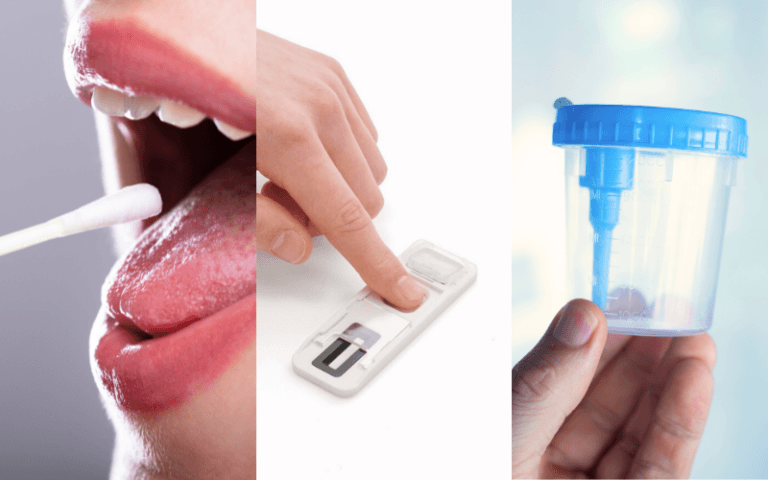
Fingerprint drug testing offers a modern, non-invasive solution that respects employee privacy while maintaining GDPR compliance. Because the test uses sweat from the fingertips, it does not store biometric data and poses no risk of capturing or storing personal identification information. This makes it a practical alternative to more traditional methods, such as urine or saliva drug tests, which may require more invasive collection procedures.
Fingerprint drug tests are quick and fully observable, making them ideal for fitness-for-duty testing in safety-critical environments where employers need to determine whether an employee is impaired on the day of testing. Testing up to six takes under 20 minutes, making it ideal for environments that require fast, reliable results without delays.
To learn more about how fingerprint drug testing works and how it can fit into your workplace testing programme, contact us for a demo. For more in-depth information on how fingerprint drug testing works, download our white paper: The Science Behind Fingerprint Drug Testing.