Key Information for Employers Doing Workplace Drug Testing
Employers increasingly ask how long marijuana stays in your system. In safety-critical industries, determining current impairment levels through workplace drug testing is crucial for making informed decisions about employee fitness-for-duty.
This blog will explore how long marijuana remains in the body, the various factors that influence its detection, and why focusing on fitness-for-duty testing is essential when designing your drug testing programme.
What Factors Affect How Long Marijuana Stays in Your System?
- Frequency of Use: Frequent or chronic users of marijuana will have higher levels of THC metabolites stored in their body fat, which can take longer to clear out. Occasional users typically clear marijuana from their system much faster.
- Body Fat Percentage: THC is stored in fat cells, so individuals with a higher body fat percentage may retain marijuana metabolites for longer periods. Conversely, individuals with lower body fat may metabolise and eliminate THC faster.
- Metabolism Rate:People with faster metabolisms will generally eliminate substances from their system more quickly than those with slower metabolisms. Age, physical activity, and diet can all affect metabolic rate.
- Consumption Method: The way marijuana is consumed (smoking, vaping, edibles, etc.) can affect the detection window. Edibles take longer to metabolise than smoking or vaping, which could affect how long marijuana is detectable in the system.
How Long Does Marijuana Stay in Your System for Drug Testing?
While marijuana can remain detectable and show up on drug tests for weeks after use, this does not necessarily indicate current impairment. This is particularly true for tests with a longer detection window, such as urine or hair follicle tests. For workplace drug testing, it’s essential to understand the varying detection windows of marijuana in different biological samples to make informed decisions about fitness-for-duty.
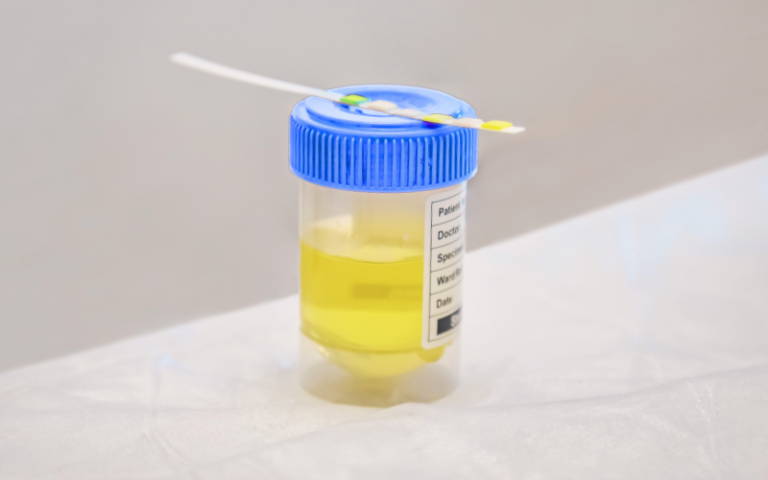
Urine Drug Testing
Saliva Drug Testing
Hair Drug Testing
Hair follicle tests can detect marijuana use for a much longer period, typically up to 90 days. This method is particularly useful for organisations that need to monitor long-term drug use and enforce a zero-tolerance policy across their workforce, ensuring that employees remain compliant with company standards over extended periods.
Fingerprint Drug Testing
Enhance Your Workplace Drug Testing ProgrammeContact us to schedule a demo and see how fingerprint drug testing can enhance your workplace drug testing programme. |
Why Detection Windows Matter for Employers
Understanding the detection windows of marijuana and other substances is essential to building a safe and compliant workplace. As an employer, it’s important to determine the purpose of the drug test and how it aligns with your company’s goals.
If the goal is to determine whether an employee is fit-for-duty on the day of testing, focusing on recent use is key. This is why tests with shorter detection windows (like fingerprint drug tests) may be more appropriate, especially in safety-critical industries like construction, manufacturing, and transportation.
However, if your goal is to monitor for long-term drug use or enforce a zero-tolerance policy, longer detection windows offered by hair follicle drug tests may be necessary.
Fingerprint Drug Testing
Fingerprint drug testing analyses trace amounts of drugs and their metabolites found in sweat from the fingertips. The process involves simply pressing fingertips onto a collection cartridge, which is then analysed using a portable reader.
Unlike urine or saliva drug tests, fingerprint drug tests focus on recent drug exposure, typically detecting use within 16–24 hours, which makes it particularly useful for day-of fitness-for-duty testing.
This method helps employers quickly assess whether an employee is impaired and unfit for duty at the time of testing, ensuring safety and compliance without invasive procedures or complex setups. It’s efficient, hygienic, and fully observable, reducing the risk of sample tampering or contamination.
The test uses lateral flow immunoassay technology, in which the sweat sample interacts with antibodies that bind specific drug metabolites. The results are analysed by a portable reader, removing the need for human interpretation.
The batch testing feature allows up to six donors to be tested in under 20 minutes. This makes it an ideal solution for environments where multiple employees need screening at once, reducing wait times and operational disruptions.
Conclusion
As an employer, it’s crucial to choose the right drug testing method to maintain workplace safety and productivity. Fingerprint drug testing offers a clear advantage when it comes to day-of fitness-for-duty testing, providing reliable results that reflect current impairment rather than past drug use.
If you are looking for an efficient, non-invasive solution that ensures a safer work environment, contact us for a demo. Let us show you how our technology can streamline your drug testing programme and help you make more informed, safety-driven decisions.
To dive deeper into the science behind fingerprint drug testing, download our whitepaper: The Science Behind Fingerprint Drug Testing.
Download White Paper: The Science Behind Fingerprint Drug Testing