Introducing or expanding a workplace drug testing programme often creates a predictable challenge: employee pushback.
Many organisations treat this as resistance. In reality, pushback often signals a communication issue. Employees may not understand why testing is being introduced, how the process works, who it applies to, or how their results will be handled. In safety-critical environments like construction, logistics, and manufacturing, these concerns should be addressed early. Ignoring pushback risks employee turnover, inconsistent compliance, and greater disruption during testing.
In this blog, we explain why employee pushback happens and how it can affect workplace drug testing programmes. We will also outline the practical steps employers can take to unlock employee buy-in.
To manage employee pushback, employers need clear communication, consistent policies, fair testing processes, and a method employees can trust.
Why Employee Pushback Happens
Employee pushback does not happen without reason. It is often driven by practical, emotional, or cultural concerns about how testing will be introduced and managed.
| Cause of Pushback | What Employees May Think | Operational Impact |
|---|---|---|
| Lack of clarity | “Why are we being tested?” | More questions, rumours, and resistance |
| Perceived unfairness | “Why are some people tested and not others?” | Lower trust and higher challenge risk |
| Privacy concerns | “Who sees my result?” | Anxiety around confidentiality and data handling |
| Invasive testing methods | “Why do I have to provide that type of sample?” | More discomfort, delays such as shy bladder or dry mouth, and reluctance to participate |
| Poor communication | “What happens if the result is non-negative?” | Confusion, fear, and inconsistent compliance |
Ignoring these concerns can create measurable business consequences.
Operational Effects of Employee Pushback
Employee pushback is not just an HR issue. It can affect the way the whole testing programme operates.
Increased Testing Times
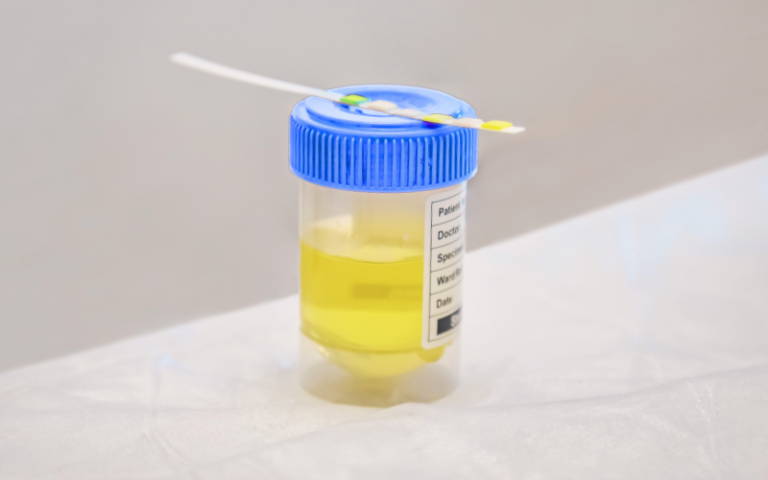
Urine testing depends on a donor’s ability to produce a sample. Saliva testing is easily delayed by dry mouth issues or nil-by-mouth requirements. These factors can delay testing and increase downtime.
Procedural Delays and Avoidance
When procedures are unclear or difficult to manage, employees may delay, challenge, or avoid testing. These operational delays often affect the bottom line.
Higher Employee Turnover Risk
One of the biggest operational pressures employers are already managing is staffing. Recruitment, retention, absence cover, and shift planning are difficult to juggle.
Perceived unfairness, invasive methods, or poor communication can weaken confidence in management decisions. Gallup reports that employees who trust their leaders are 61% more likely to stay with their company and not look for another job. This outlines how much trust matters when introducing sensitive workplace processes.
Simply put, employees who feel respected are more likely to remain engaged and stay.
As many businesses know, replacing people is expensive, disruptive, and slow. Research by Oxford Economics and Unum found that replacing an employee earning £25,000 or more carries an average financial impact of £30,614. Most of that cost comes from lost productivity while the new employee gets up to speed. A well-thought-out drug testing programme will not push productive employees closer to leaving.
The goal is not just to introduce testing. It is to introduce testing in a way that employees can understand, trust, and engage with.
Position Drug Testing as a Safety Measure, Not a Punishment
If workplace drug testing is introduced as a disciplinary tool, it can be seen as policing or lifestyle monitoring.
Research from the American Psychological Association shows that 56% of employees who experience workplace monitoring report feeling more stressed during the workday. While drug testing is different from electronic monitoring, the finding reinforces an important point: when employees feel controlled rather than protected, trust can quickly break down.
This is why drug and alcohol policies should clearly communicate that testing is a proactive safety control, not a reactive response to wrongdoing or suspicion. The objective of workplace drug testing is not to catch employees out. It is to help employers identify and manage risk before it becomes an incident.
Your programme and messaging should focus on:
- Protecting employees in safety-critical environments.
- Preventing incidents through early intervention and visibility.
- Ensuring employees are fit for duty at the point of work.
- Applying testing consistently and fairly.
- Supporting a safer workplace for everyone.
When this mindset is embedded from the outset, testing becomes a normal part of operations rather than a point of tension.
Terry Elvin, Head of UK Sales at Intelligent Fingerprinting, has worked with organisations across multiple industries to implement workplace drug testing programmes and has seen firsthand how communication shapes employee acceptance.
“If we can understand why we do something, why there is a policy or procedure in place, buy-in is far easier. It is about education. It is about two-way communication.”
Download a FREE pack of workplace resources, including posters and employee-facing materials, designed to support clear communication and improve employee buy-in.
Apply Testing Fairly Across the Organisation
Unfairness quickly triggers employee resistance.
Research from Gallup shows that when employees perceive unfair treatment or inconsistency, trust in management declines and engagement drops. Gallup reports that highly disengaged employees are 18% less productive and far more likely to resist workplace initiatives. Additionally, employees who lack trust in leadership are substantially more likely to disengage from company policies and processes altogether.
Charlotte Le Maire, Specialist Criminal and Road Regulatory Lawyer, Founder and Partner at LMP Legal, recommends that employers take a structured and consistent approach:
“My recommendation, I know this is a recommendation from tribunals, is that drug testing should be random. It should be whatever percentage of your workforce that you agree on, put in your policy, you need to enact, you need to do it and evidence that you’re doing it. And it should be top to bottom. So it should be absolutely everybody sitting at a desk, to everybody driving.”
Communicate Clearly and Early
Unclear communication creates uncertainty. Uncertainty creates resistance. Employees expect clear answers to a few key questions:
- Why am I being tested?
- How will I be tested?
- Is the test accurate?
- Who is going to test me?
- What are you going to do with the results?
- What happens if it’s non-negative?
Without clear answers, employees may make incorrect assumptions about privacy, fairness, and consequences.
Communication should be:
- Clear and direct
- Free from unnecessary jargon
- Delivered before testing begins, not after
- Reinforced through written materials, onboarding documents, and workplace resources.
Employees do not need or expect complex technical explanations. They want to understand the purpose of testing, the process, and the protections in place.
Download our free drug testing resource pack to access printable posters, employee guidance, and management support materials to help clarify communication about workplace drug testing.
Choose a Method That Reduces Employee Pushback
Even with the right policy and clear communication, the testing method itself can reinforce or undermine trust.
Traditional methods, such as urine drug tests and saliva drug tests, are invasive and operationally disruptive. They often require special facilities, gender specific supervision, or long waiting periods. All of these increase friction and make the process feel more like policing rather than protection. These issues matter because employee pushback is often shaped by the experience of testing itself. If the process feels invasive, embarrassing, or disconnected from real workplace risk, employees are more likely to push back.
Fingerprint drug testing directly addresses these concerns. It enables:
- Sample collection in under one minute.
- Results in ten minutes.
- No need for toilets or specialist facilities.
- A non-invasive and dignified collection process.
- A 16–24-hour detection window that supports fitness for duty decision-making.
Fingerprint drug testing also supports the broader goal of prevention. Focusing on recent drug use means employers can make better-informed safety decisions. In practice, the method you choose does not just determine how you test. It determines how your entire programme is perceived.
Reduce Pushback Before It Starts
Employee pushback is easier to prevent than to resolve. When testing is introduced without clear communication, a consistent policy, or a respectful testing approach, employees are more likely to view it as intrusive or unfair.
When testing is positioned as a safety measure, applied consistently, and explained clearly, it becomes easier for employees to understand why it matters. The strongest workplace drug testing programmes are not built on enforcement alone. They are built on clarity, fairness, trust, and a process employees can engage with confidently.
To see how fingerprint drug testing can reduce disruption, improve employee acceptance, and support a more consistent workplace safety programme, contact Intelligent Fingerprinting to book a demo.