By the time a non-negative test result appears during a workplace drug test, the organisation has already been exposed to some level of risk. In safety-critical environments, that risk can affect employees’ lives, operations, and the wider public. Drug testing is not just about detection. It is about prevention.
The best way to prevent a non-negative test result is to test more.
Effective drug testing programmes aim to reduce risk before it becomes an incident, not just react after the fact.
The Cost of a Non-Negative Result
When conducting random or pre-employment drug testing, a non-negative result is not merely a compliance issue. It is a financial and operational issue that can lead to:
- Lost labour hours
- Shift disruption
- Project delays
- Replacement staffing costs
- Increased administrative burden
While these situations can be disruptive, most organisations would rather identify potential issues during routine testing than after an incident occurs. For-cause testing plays an important role in any workplace drug testing programme, but it is inherently reactive. Proactive approaches, such as random and pre-employment screening, help create a stronger deterrent by making testing visible, consistent, and expected. Prioritising prevention helps minimise risk before incidents occur, reduce operational disruption, and support safer, more consistent workplace outcomes.
Step 1: Prevention Starts with a Clear Drug and Alcohol Policy
Every effective programme begins with a well-defined drug and alcohol policy. A strong policy does more than outline rules. It removes ambiguity, supports consistent decision-making, and provides a clear framework applicable across all workplace scenarios. Your policy should clearly define:
| Policy Area | Purpose | What to Include |
|---|---|---|
| Prohibited Substances and Behaviours | Set clear expectations on what is not permitted. This creates clarity and ensures the policy is enforceable. |
|
| Testing Procedures That Are Fair and Consistent | Employees need to understand how and when testing takes place. Clear procedures protect both the organisation and employees by ensuring testing is applied fairly and consistently. |
|
| Clear Consequences for Violations | Your policy must define what happens when a violation occurs. Consistency is critical. Without clear consequences, enforcement becomes inconsistent and difficult to defend. |
|
| Reporting and Escalation Procedures | Employees and managers should know how to act if concerns arise. This helps identify and address risks before they develop into incidents. |
|
| (Optional) Support Pathways for Employees | A modern workplace drug testing policy may also include support mechanisms. This demonstrates that the organisation is not only enforcing standards, but also supporting employees where appropriate. |
|
Step 2: Communication Is Your Strongest Deterrent
Employees do not resist workplace drug testing; they resist uncertainty around why it exists and how it is applied. Employees are far less likely to take risks when they clearly understand:
- Why workplace drug and alcohol testing is in place
- How testing works across different drug detection methods
- What happens if a non-negative drug test occurs
How testing is communicated matters just as much as how it is implemented. When organisations position testing around employee safety rather than punishment, adoption increases significantly.
For example, A&F Sprinklers Ltd introduced a routine workplace drug testing programme with a clear focus on protection rather than discipline. By taking time to explain the process, address concerns, and align testing with their wider safety culture, they achieved strong employee buy-in.
“Our team is more appreciative of why we do it… our non-negatives have dropped nearly 90% across the board.” Dan Clayton, Group HR, Compliance & ESG Manager
Step 3: Frequent Testing Reduces Risk Before It Happens
Consistent and visible workplace drug screening is widely recognised as one of the most effective deterrents to substance use. When testing is predictable or infrequent, behaviour is unlikely to change. Employees are less likely to take risks when they know testing can occur at any time. This is often where many programmes fail. Testing is implemented but not applied frequently enough to influence behaviour.
Step 4: Choose the Right Drug Detection Method
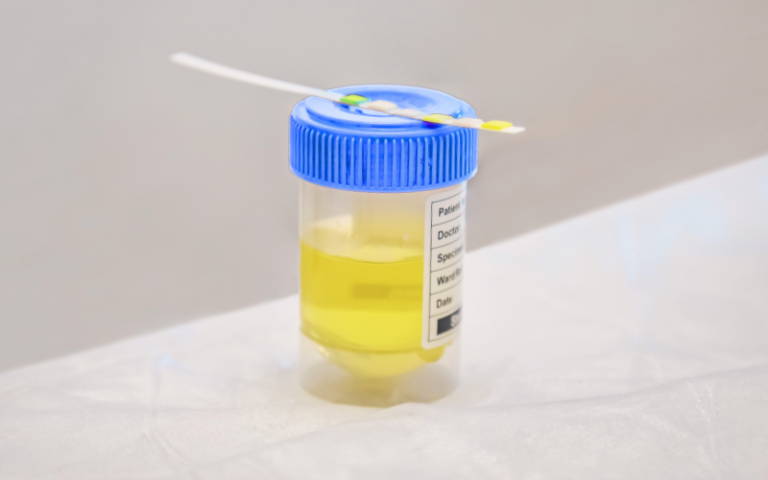
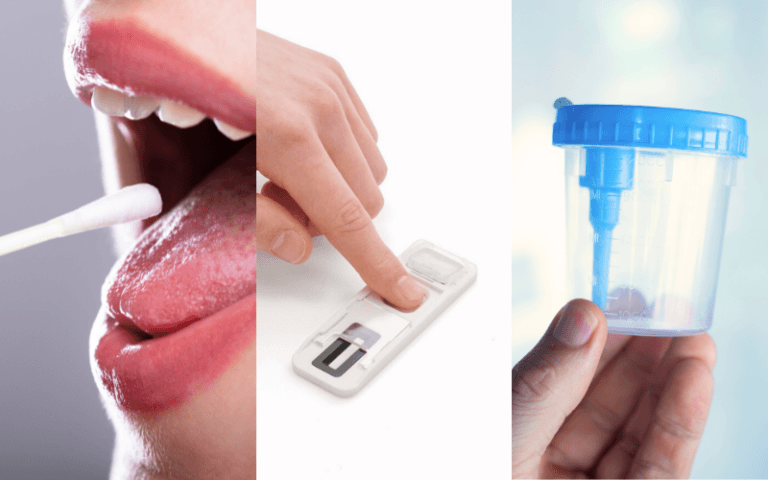
The drug-detection method you choose directly affects prevention. Traditional approaches, such as the urine drug tests and saliva drug tests, often come with friction:
- Delays due to facilities and waiting times
- Discomfort for employees
- Complex drug screening procedures
This friction reduces participation. Reduced participation reduces frequency. Reduced frequency reduces deterrence.
Modern methods remove these barriers.
Fingerprint drug testing is a non-invasive method that analyses trace amounts of drugs and metabolites in fingertip sweat. The collection process involves pressing fingertips onto a cartridge, which is then analysed using a portable reader.
Because the process is simple and fully observable, it removes the need for facilities, reduces delays, and supports consistent implementation across teams. Faster, simpler testing enables organisations to test more frequently. Increased frequency strengthens deterrence. Stronger deterrence reduces incidents.
Fingerprint testing detects recent drug use within a 16 to 24-hour window, providing clearer insight into day-of fitness-for-duty.
Download the Free Printable Drug Testing Resource Pack
Clear communication is one of the most effective ways to strengthen a workplace drug testing programme. To help employers explain the purpose of testing, support employee understanding, and reinforce the safety message, we have created a free printable drug testing resource pack.
The pack includes posters, employee guidance, and management support materials that can be displayed on-site, shared during inductions, or used in internal communications. These resources help employees understand why testing is done, what to expect, and how drug screening supports a safer, fairer workplace.
Download the free drug testing resource pack to support clearer communication and more confident conversations about workplace drug testing.
Book a Demo
Prevention depends on more than having a policy in place. It requires regular communication, consistent processes, and a practical testing method applicable across real workplace environments. The Intelligent Fingerprinting Drug Screening System is designed to make workplace drug testing simple, non-invasive, and efficient, helping organisations test more frequently and support stronger deterrence.
Book a demo to see how fingerprint drug testing works and speak to our team about how it could support your workplace drug testing programme.