The Price of a Non-Negative: Escalation Costs in Drug Testing
Workplace drug testing typically follows one of two models: full in-house testing or a hybrid approach. In-house programmes keep everything under one roof, with companies handling initial screenings, sample collection, and lab confirmations using their own staff. Hybrid models allow internal teams to manage routine testing while relying on third-party providers for lab confirmation when a non-negative result appears.
Escalating a test for confirmation introduces new costs. Companies must assign staff to supervise the process, keep employees away from work to provide samples, purchase legally defensible back-to-lab kits, and pay for certified lab analysis. These steps protect the integrity of the test, but they also drain time, money, and resources. These costs are based on UK averages, but the principles apply globally.
Let’s break down what that really looks like.
In-House
When a workplace drug test returns a non-negative result, it requires further investigation. To take action in line with a company’s drug and alcohol policy, a confirmation result from an accredited laboratory is required. This is often carried out using a back-to-lab kit. A back-to-lab kit is a legally defensible package that includes tamper-evident collection materials, chain-of-custody documentation, and secure packaging for transport. Completing the kit involves supervised sample collection, detailed paperwork, and tracked dispatch to ensure integrity and compliance.
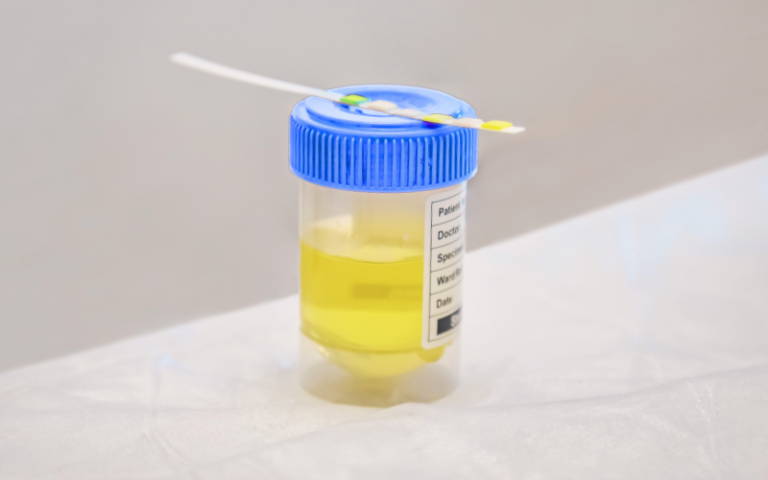
Whether the initial screen uses urine or saliva, confirmation testing is almost always done with urine. In most cases, the original urine sample is split into a secondary kit, requiring the administrator to transfer urine from one collection cup to another. The average cost of a non-negative result in this model, including the secondary kit and lab confirmation, is typically around £75.
Once a confirmatory test is collected, the sample is sent to an accredited laboratory for analysis. During this period, the company’s drug and alcohol policy determines how the donor is managed while awaiting results. Chain-of-custody documentation must be completed, including donor consent, signatures, and the sealing of samples. Following these steps correctly is essential to ensure the result is legally defensible if challenged.

In total, the process requires about 15 minutes each from the administrator and the donor, amounting to 30 min of labour per incident.
The typical turnaround time for a back-to-lab kit is three to five working days.
Example: A company with 800 employees across two sites conducts routine random drug testing on 10% of its workforce. That equals 80 employees tested, and if 10% of those return non-negative results, four cases must be escalated for lab confirmation.
10% average based on industry. Can vary depending on sector, geography, and donor demographics.
At a labour rate of £20 per hour (for both administrator & donor), the company absorbs £40 in lost productivity.
While the cost of in-house confirmation is low, it often places staff in uncomfortable situations.
For the administrator, this can mean splitting a urine sample between multiple collection cups, sealing tamper-evident packaging in front of the donor, or handling chain-of-custody paperwork under scrutiny. For the donor, it can involve producing a second sample under pressure or answering detailed questions about personal medication use.
Many organisations find these steps invasive and burdensome, which is why, despite the lower cost, in-house confirmation is often viewed as undesirable.
| Item | Cost |
|---|---|
| Labour to Administer & Donor | £40 |
| Back to Lab Kit & Laboratory Testing (4 non-negative events) | £320 |
| Total Escalation Cost (Per Year) | £360 |
Hybrid In-House
A hybrid drug testing model gives organisations control over routine screening while outsourcing confirmation when needed. Your team handles standard tests, but when a result comes back non-negative, a third-party service is called in. These collectors manage the chain of custody and transport the sample to a certified laboratory.
When a non-negative occurs, it often creates serious delays. Industries that operate 24/7 face prolonged downtime, as staffing limitations and reduced service hours can significantly slow response times. Urine testing adds another layer of complexity. For female donors, the process cannot continue until a qualified female collector arrives.

This delay leaves both the donor and the manager waiting and unable to work. Across multiple sites and test volumes, the hybrid model quietly drains time, morale, and funds.
Industry data shows that callout teams typically take two to four hours to arrive, especially in remote locations or 24/7 sectors. These delays happen for several reasons:
- Limited availability of gender-specific collectors
- Restricted service hours, especially overnight and on weekends
- Travel time to reach the site
- Time needed to coordinate and set up chain of custody
The average callout fee for a third-party collector is £235 per incident. This fee covers travel, collection, documentation, and dispatch to the lab.
Example: A company with 800 employees across two sites tests 10% of its workforce. If 10% of those tests return non-negative results, the company must escalate four cases for confirmation.
Each escalation results in downtime. Typical back-to-lab response time is about four hours. With both the donor and their manager tied up, that equals eight hours lost per incident. With four non-negative events per year, the total downtime adds up to 32 hours of lost productivity.
At a labour rate of £20 per hour, the company absorbs £640 in lost productivity alone.
Hybrid Model Escalation Costs
| Item | Total Cost |
|---|---|
| Callout Fee (£235 per dispatch x 4 non-negative events) | £940 |
| Idle Time Waiting for Callout Teams (4 non-negative events) | £640 |
| Total Escalation Cost (4 Incidents) | £1,580 |
Fingerprint Drug Testing: A Smarter Way to Avoid Escalation Costs
Fingerprint drug testing offers a modern alternative that helps organisations avoid the hidden costs of non-negative results. The back-to-lab kit is more hygienic than urine tests and faster than relying on a third-party service.
When a fingerprint test returns a non-negative result, the process moves to laboratory confirmation. This method keeps the procedure non-invasive, requires no special facilities, and maintains full chain of custody to ensure results remain legally defensible.

Here’s how it works:
- Hand Preparation – The donor washes and dries their hands to remove any external contaminants. They then sit for 15 minutes without touching anything.
- Sample Collection – The donor places all ten fingertips onto a new collection Cartridge designed for laboratory analysis.
- Sealing & Documentation – The administrator seals the Cartridge in tamper-evident packaging and completes full chain-of-custody documentation, including donor consent and signatures.
- Secure Transport – The packaged sample is dispatched via tracked courier to an accredited laboratory for confirmatory analysis.
- Laboratory Confirmation – The lab conducts a full toxicology screen. The lab conducts a full toxicology screen, with results returned to the employer and legally defensible if challenged.
In total, the process requires about 30 min of labour (administrator and the donor), amounting to 1 hour of labour per incident.
| Item | Cost |
|---|---|
| Labour to Administer & Donor | £160 |
| Back to Lab Kit & Laboratory Testing (4 non-negative events) | £312 |
| Callout Fees | £0.00 |
| Idle Time Waiting | £0.00 |
| Total Escalation Cost | £472 |
The Bigger Picture
Non-negative drug test results demand further investigation, and that process is never free. Whether you manage testing in-house or rely on a hybrid model, each escalation introduces labour costs, delays, and administrative overhead. In-house programmes require staff time and specialised kits. Hybrid models add third-party callout fees and idle time that quietly drain resources.
Fingerprint drug testing changes the equation. By delivering rapid, on-site results with no need for urine collection, it eliminates the most time-consuming and costly parts of escalation. No callouts. No waiting. For organisations that want to protect safety without sacrificing efficiency, fingerprint testing offers a smarter, cleaner, and more cost-effective path forward.
This blog is part of our series on the real costs of workplace drug testing. In our last post, we outlined the average labour cost to conduct workplace drug testing.
Want to know how these factors play out in your business?
Use our free Cost Comparison Calculator to get a custom quote based on your organisation’s setup.
Just enter your details (site count, test volume, current method) and receive a tailored breakdown of costs and projected savings using fingerprint-based screening. It’s a fast, transparent way to see where inefficiencies lie and how much you could reclaim by switching.