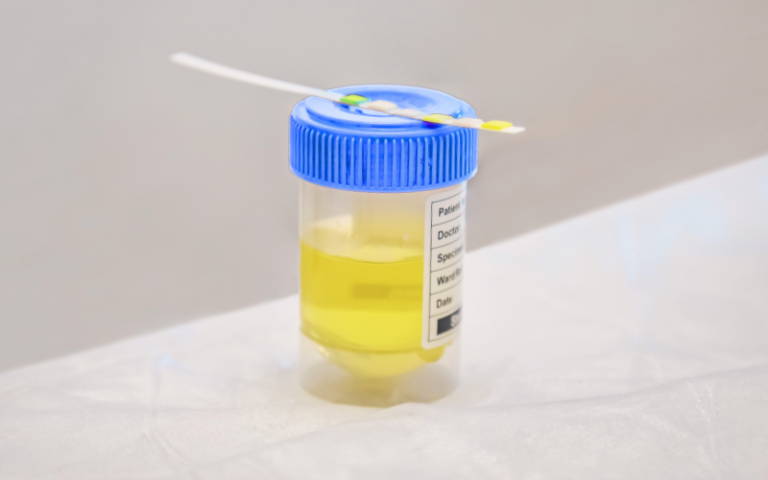
In workplace drug screening, what many employers call a “positive drug test” is actually a “non-negative screening result”.
Only a laboratory can confirm a positive or negative result.
Regardless of what we call it, a non-negative drug screening result is one of the most stressful moments in a shift. Employers must manage immediate pressures, including shift disruptions, project delays, the need to find replacement staff, and the possibility of disciplinary action. A non-negative result involves workplace safety protocols, employee rights, compliance, and operational continuity.
In this blog, we explain how employers can handle a non-negative drug test result in five clear steps.
Handled poorly, employers risk legal exposure, reputational damage, and loss of employee trust.
Step 1: Stay Objective and Follow Your Policy
The first priority is consistency.
Every action should align with your drug and alcohol policy or your workplace drug testing policy. A non-negative result is not a confirmed positive. It is an initial screen showing substance presence and needs further checking.
At this stage:
- Do not make assumptions.
- Do not communicate conclusions.
- Do not take disciplinary action.
- Do not deviate from your defined drug screening procedures.
Step 2: Remove the Employee from Safety-Critical Duties
If the employee is in a role where impairment could pose a risk, immediate action is required. Your response depends on your policy and the role’s risk level.
In practice, employers may:
- Temporarily remove the employee from safety-critical duties.
- Reassign them to low-risk tasks.
- Suspend the employee while awaiting confirmatory results.
This step is critical. A non-negative result may indicate that risk is already present within operations. The objective is to manage risk without making assumptions. Any action should be proportionate and supported by policy.
Step 3: Arrange Confirmatory Testing
Confirmatory testing is needed to validate the presence of a substance. Employers generally have two options at this stage. They can collect the confirmatory sample internally and send it to an accredited laboratory, or they can use a third-party service provider to manage the process.
Best practice includes:
- Using a secure chain of custody.
- Sending samples to an accredited laboratory.
- Collecting a second sample immediately.
No employment decision should be made until confirmatory results are received. The outcome remains unresolved until confirmatory results are returned.
Step 4: Maintain Confidentiality and Clear Communication
All drug test results are classified as sensitive personal data under the General Data Protection Regulation (GDPR).
Employers Must:
- Limit access to authorised personnel.
- Store information securely.
When Communicating with the Donor:
- Be clear about the process.
- Avoid accusatory language
- Explain the next steps and timelines.
This safeguards both compliance and trust.
Step 5: Act Based on Confirmed Results
Once employers receive confirmatory results, they can proceed based on verified evidence.
If the result is negative, employers should:
- Return the employee to normal duties.
- Remove any temporary restrictions.
- Document and close the case
If the result is positive, employers should:
- Follow your workplace drug testing policy.
- Apply decisions consistently.
- Document and justify the process.
At this stage, decisions must be based on verified evidence, not assumptions or initial screening results.
These can be difficult conversations to have. However, the best way to manage these conversations is to start long before that moment ever happens. Clear communication across the whole workplace, from onboarding and pre-employment testing through to routine random testing, helps employees understand what the business expects. Explain early why testing is in place, which testing methods are used, and how results will be handled. When prevention is built into the programme from the beginning, employers can reduce uncertainty, build trust, and make difficult situations easier to manage if they arise.
Free Resource Pack
Introducing or updating a workplace drug testing programme requires clear communication with employees.
This free resource pack provides organisations with practical materials to explain why testing is done, what employees can expect, and how drug screening supports workplace safety.
The pack includes posters, employee guidance, and management support materials. These can be printed, displayed on-site, shared during inductions, or used in internal communications. Each resource outlines the purpose of workplace drug testing and its role in maintaining a safe, fair, and supportive workplace.
Download your free drug testing resource pack now.
How to Upgrade Your Workplace Drug Screening
The way employers test can significantly affect how many positive results they encounter.
Traditional drug testing methods, including urine and saliva testing, can introduce practical challenges. They need toilets or controlled facilities, have longer collection processes, additional logistics, and a detection window of up to 7 days.
Fingerprint drug testing provides a practical alternative.
It enables:
- Sample collection in under one minute.
- Results in ten minutes.
- Efficient testing with no need for toilets or specialist facilities.
- Focus on fitness for duty with a 16-24 hour detection window.
Fingerprint drug testing reduces disruption, quickly reveals risk, and allows employers to maintain a more consistent testing process. It also helps address one of the main concerns employees may have about workplace drug testing: the feeling that the process is invasive, embarrassing, or disconnected from current workplace safety.
By focusing on recent drug use, fingerprint drug testing supports decisions that are more closely aligned with real workplace risk.
Enhance Your Workplace Drug Testing ProgrammeContact us to schedule a demo and see how fingerprint drug testing can enhance your workplace drug testing programme. Book a Demo |
Prevention Should Take Priority
A non-negative drug test result signals that risk may already be present within your operation. An effective programme includes regular random testing, applied consistently and supported by a clear policy.
Charlotte Le Maire, Specialist Criminal and Road Regulatory Lawyer, Founder and Partner at LMP Legal, recommends that employers take a structured and consistent approach:
“My recommendation, I know this is a recommendation from tribunals, is that drug testing should be random. It should be whatever percentage of your workforce that you agree on, put in your policy, you need to enact, you need to do it and evidence that you’re doing it. And it should be top to bottom. So it should be absolutely everybody sitting at a desk, to everybody driving.”
This matters because consistency protects both the employer and the workforce. A documented random testing programme helps demonstrate that testing is not targeted, reactive, or applied only after a problem has occurred. Handling a non-negative result correctly requires structure.
How to Reduce Your Non-Negative and Positive Results
Handling a non-negative drug screening result correctly requires a clear policy, consistent procedures, confidential communication, and a testing method that helps employers manage risk quickly.
The Intelligent Fingerprinting Drug Screening System makes workplace drug testing simple, non-invasive, and efficient. Sample collection takes under one minute, and results are available in ten minutes. Our 16- to 24-hour detection window helps organisations make critical day-of decisions while supporting fairer, more consistent workplace drug testing processes.
Book a demo to see how fingerprint drug testing works and speak to our team about how it could support your workplace drug testing programme.