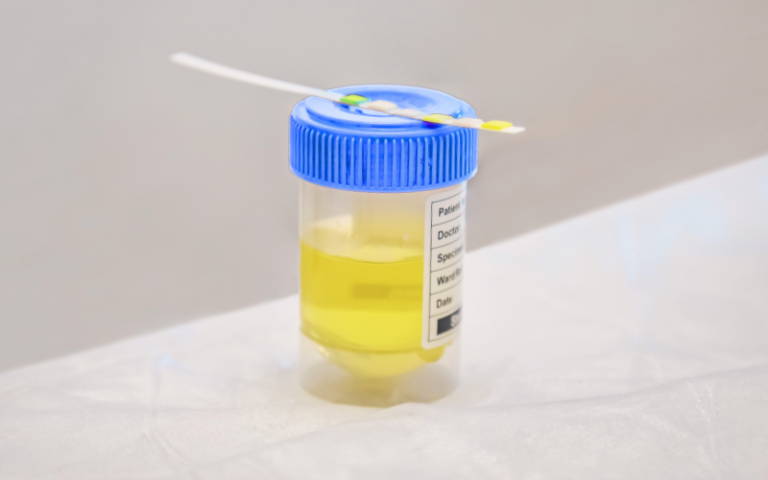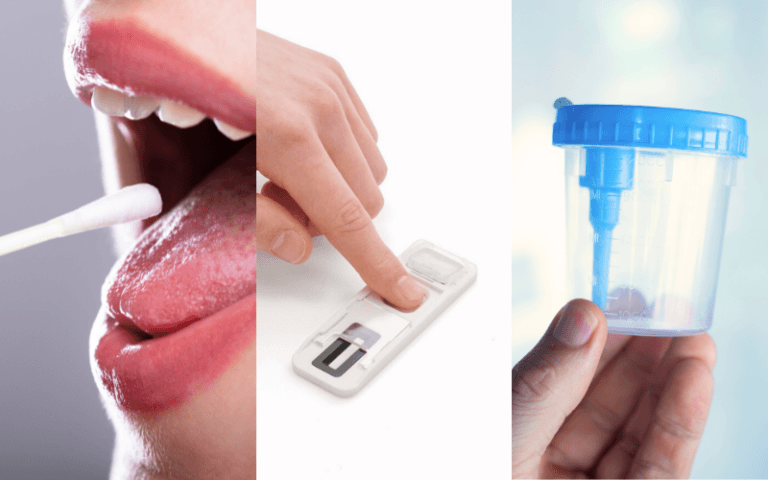
In an ideal situation, a urine drug test is quick. A donor provides a sample, an on-site screen gives a result in minutes, and everyone gets on with their day.
The problem is that an ideal situation almost never exists on a real worksite. The time it takes for a urine test is rarely determined by the test itself. It is decided by the collection process around it, and that process can stretch a two-minute task into a large part of someone’s shift. Understanding where that time goes is key to understanding why urine drug test timing is so unpredictable, and why the delay matters if you are the person responsible for keeping a site running.
Quick and Easy, In Theory
Under perfect conditions, urine testing is straightforward and familiar. However, that reputation is built on the best-case scenario. The best case assumes a lot: a suitable private facility on hand, the right staff available, and a donor who is ready and willing to provide a sample immediately.
Take any of those away, and the timeline changes. On a live site, in the cold or the rain, at the end of a shift, several of them are missing at once.
What Delays a Urine Test on Site
Five things routinely turn a quick test into a slow one. None of them are unusual. Most sites will meet several on any given testing day.
| Setting up the Facilities | A urine sample cannot be collected just anywhere. It needs a private, secure, and appropriate space that protects the donor’s dignity and the integrity of the sample. Arranging that on a construction site, in a depot, or across a dispersed operation takes time and planning before a single test happens. |
| The need for gender-appropriate staff | Correct collection procedure often requires a same-sex collector. If the right person is not on site when a test is needed, the test waits until they are. On a small or remote team, that alone can hold up the process for hours. |
| Shy bladder syndrome | Some people simply cannot urinate on demand when they feel observed or under pressure. This is a recognised medical condition, paruresis, and it is more common than many employers expect. It is nobody’s fault, but it can add a long and uncomfortable wait to the process. |
| Not enough fluid to provide a sample | A donor may be perfectly willing but physically unable to produce a sufficient sample straight away. The usual answer is to wait, offer fluids, and try again later, which can mean keeping that person and a collector occupied for a considerable time. |
| The opportunity to delay | Because a urine sample depends on the donor being both able and willing to provide one, the process can also be slowed on purpose. A worker who would rather sit in a warm office than head back out into the cold and rain has every reason to take their time. The method itself hands them that opportunity. |
Why the Wait Matters
For an operations leader, every one of those delays is a person off task, and that is where the cost sits. The connection is direct: the longer it takes to collect a sample, the longer it takes to reach a fitness-for-duty decision, and the longer the disruption lasts.
This is not hypothetical. At HMP Parc, a Category B prison in South Wales, the security firm G4S found that urine testing tied up staff for hours before it switched to fingerprint screening:
“With urine testing, by the time we’d completed the paperwork and obtained the sample, that staff member could be with us for two to four hours. That means the person couldn’t fulfil the role they were assigned to. This impacted the safe running of the prison.”
That single account captures the immediate problem. The collection process, not the analysis, removed a worker from their post, and that absence had direct operational and safety consequences.
The knock-on effect reached further than any single test. Because each urine test took so long and involved so many steps, the number of tests G4S could realistically conduct remained low. An effective testing programme acts as a deterrent. So, the friction around collection did not just slow down individual tests; it quietly undermined the programme’s purpose. Since moving to fingerprint screening, G4S has been able to test more often and with far less disruption. You can read the full G4S case study for the details.
A Modern Method with None of The Friction
This is where the choice of method matters, because the delays above are specific to urine collection. Remove the sample-on-demand problem, and most of them disappear.
Fingerprint drug screening collects sweat from a fingerprint. There is no facility to set up, no need for a same-sex collector, no waiting for a donor who cannot go, and no opportunity to stall in a warm office. A sample can be collected in seconds, regardless of hydration or willingness, and Intelligent Fingerprinting’s system provides a screening result in under 10 minutes. You can read more about how fingerprint drug testing works.
One point holds true for every method, and it is worth stating plainly. A fast on-site result is a screening result, not a confirmed positive. Any non-negative screen, regardless of method, is sent to a laboratory accredited by the United Kingdom Accreditation Service (UKAS) for confirmation before any formal action is taken. It is worth understanding what a non-negative drug test actually means before building it into a policy. The difference a faster method makes is not in the confirmation step, which every method shares. It is about how quickly and how smoothly you can get a usable sample in the first place.
Choosing a Method That Fits Your Operation
Collection time is only one of several factors that separate the main testing methods. Disruption to the shift, on-site capability, hygiene, dignity, supervision, and total programme cost all pull in different directions, and the right balance depends on your operation rather than on any single feature.
If you are weighing up the options, our comparison of fingerprint, urine, and saliva testing sets them side by side, and the UK employer’s guide to drug testing at work covers the wider policy and legal context.
For a fuller framework, our free guide, The Workplace Drug Testing Method Comparison Guide, walks through the nine criteria that matter when choosing an approach, including a printable decision checklist you can take to a safety, HR, or finance committee. [Download link to follow]
To see a fast on-site screening result in practice, you can also book a no-obligation demonstration.
This article is general information, not legal or HR advice. Employers should take their own legal and HR advice, and follow the guidance of the Information Commissioner’s Office on handling health and testing data, before introducing or changing a testing programme.