Do contracts require a drug and alcohol policy? Increasingly, the answer is yes.
For a few sectors it is a legal requirement; for many more it has become a commercial one, written into the pre-qualification questionnaires and supply-chain standards that decide who gets shortlisted. Either way, the direction of travel is the same: a documented policy and a demonstrable ability to test are shifting from “nice to have” toward something closer to “expected at the bid.”
That reframes workplace drug and alcohol testing entirely. It is not only a safety measure or a cost to manage. It is a commercial capability and, increasingly, part of being in the running at all.
When Is a Workplace Drug and Alcohol Policy a Legal Requirement?
In a handful of safety-critical sectors, testing is not a choice. The law requires it.
- Rail: under the Transport and Works Act 1992 (section 27), it is a criminal offence to carry out safety-critical work on a transport system while unfit due to drugs or alcohol, or to allow it. This is enforced by the British Transport Police.
- Maritime: the Railways and Transport Safety Act 2003 (Part 4) sets alcohol and drug offences for mariners.
- Aviation: Part 5 of the same Act, alongside the Civil Aviation Authority’s requirements, covers safety-critical aviation personnel.
Requirements vary by role and sector, and none of this is legal advice. But if you operate in these areas, a documented, tested programme is a baseline obligation, not a differentiator.
Why Contracts Increasingly Require a Drug and Alcohol Policy
For most employers, the pressure is commercial rather than statutory, and it arrives through procurement.
In construction, the clearest example is the Common Assessment Standard, the industry’s standardised pre-qualification questionnaire. It assesses suppliers on health and safety as a core module and directly asks whether you have a drug and alcohol policy. Certification through a Safety Schemes in Procurement (SSIP) member scheme is increasingly expected for shortlisting. In practice, a documented, evidenced policy is becoming part of clearing the bar before a client will even look at your bid.
The sector bodies have made the expectation clearer. Build UK, with the endorsement of the Construction Leadership Council, has published a template drug and alcohol policy for the industry to adopt, showing that a formal policy is becoming common practice rather than something only the most diligent firms have.
Major clients are increasingly passing that expectation down their supply chains. Network Rail, for example, sets a drugs and alcohol standard that its supply chain is expected to meet, not just its own staff. Win work with a client like that and their testing expectations become yours, and your subcontractors’. A growing number of large contractors now apply the same logic to the firms they engage.
This is the shift Tony Jackson, Head of Safety, Health, Environment and Quality at Sinewave, describes:
“From a commercial point, a lot of the big contracts we are looking for or being asked to bid for are now requesting the capacity to be able to test.”
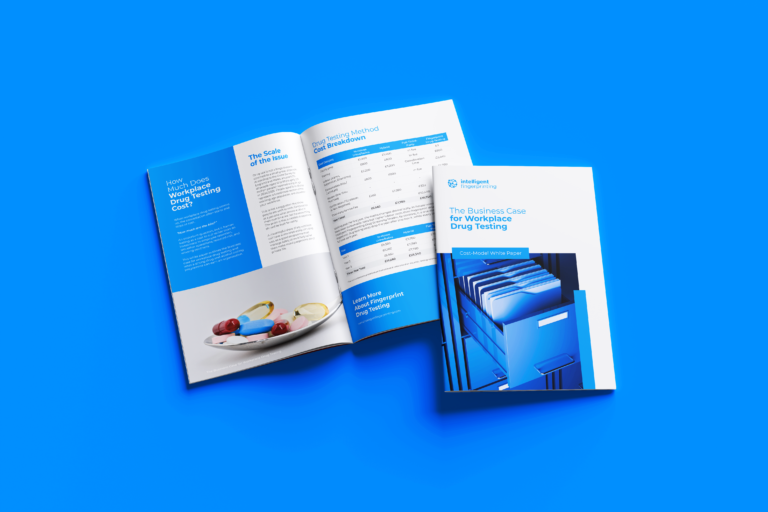
Download The Business Case for Workplace Drug Testing here.Finding this useful? The full case, with the numbers behind every return, is in our white paper. |
What Procurement Teams Want to See in a Drug and Alcohol Policy
Simply having a policy isn’t enough for most bids. When a client or pre-qualification body assesses you, a document on a shelf counts for little; they want evidence the policy is real and applied. In practice, that means three things:
- A documented policy that sets out who it covers, when testing happens, and what follows a non-negative result.
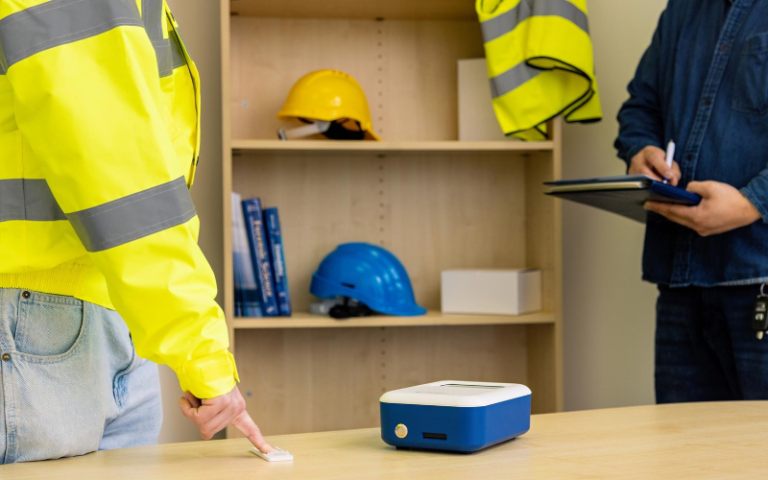
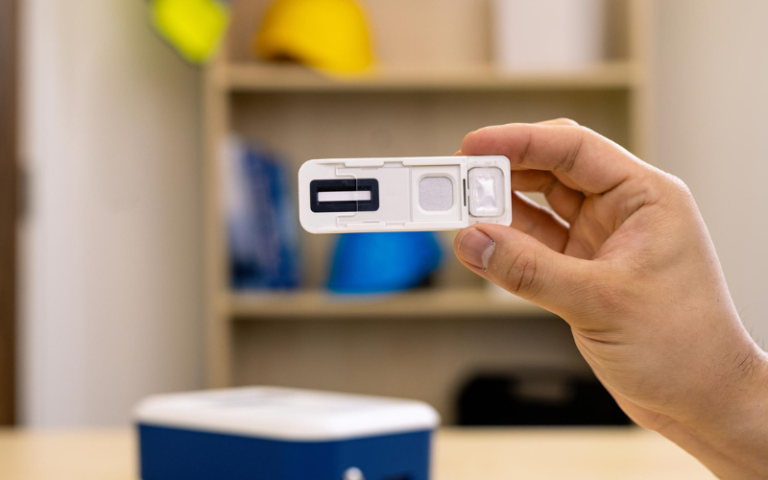
- A demonstrable workplace drug testing testing capability. The ability to actually test, on site, when the policy says you will.
- Records that prove it. Evidence you apply the policy consistently, not just on paper.
A capability you can stand up without disruption, with an auditable record produced as a by-product, is what turns a policy from a claim into something you can evidence on a tender.
How a Drug Testing Capability Wins Work
Framed this way, testing stops being a cost to justify and becomes a capability that pays for itself in work won. The programme that keeps you on an approved supplier list, or gets you through pre-qualification, is protecting revenue you would otherwise never see. The method you choose affects how easily you meet these expectations: a low-disruption approach that produces its own audit trail makes compliance something you can evidence rather than scramble for. You can model what that costs for your own operation with our drug testing cost calculator.
Do Contracts Require a Drug and Alcohol Policy?
In safety-critical sectors, often by law. Across construction and the wider supply chain, increasingly by commercial expectation. Either way, a testing capability is becoming part of the bid, and the organisations treating it as a commercial asset rather than a compliance chore are the ones staying on the shortlist.
See the full business case. Our white paper sets out all four returns, with a method-by-method cost comparison across three years. Download The Business Case for Workplace Drug Testing. Prefer to see it in practice? Contact us for a demo, and we will show you how fingerprint drug testing supports a bid-ready programme.