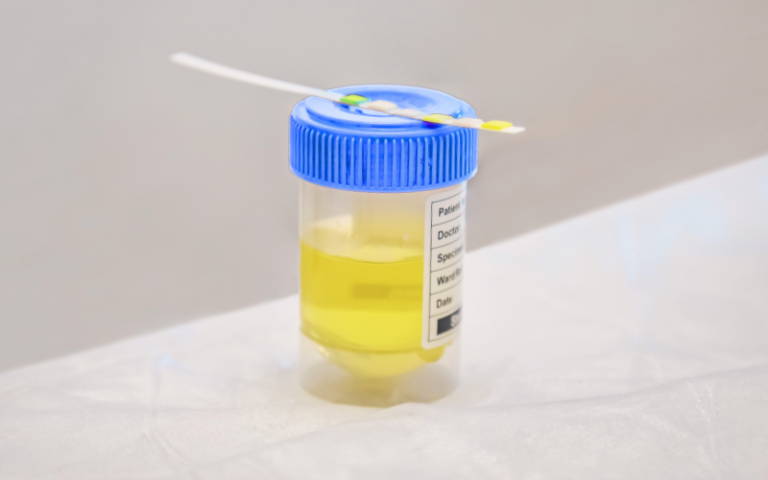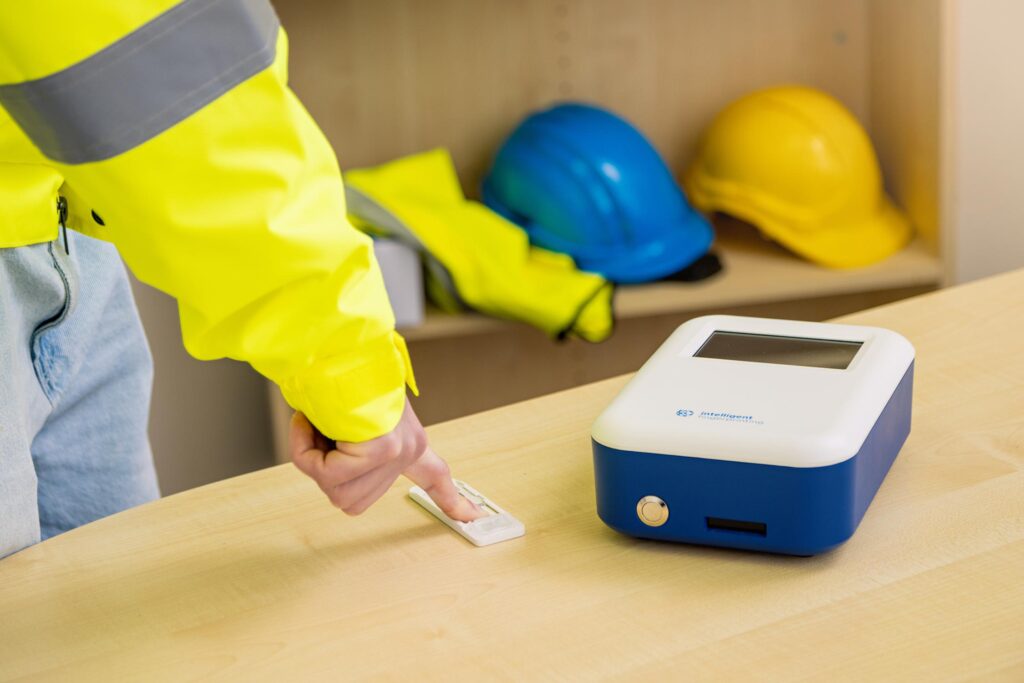
Many workplaces start with outsourced drug testing. It is easy. A provider sends a collector to the site, or staff travel to a clinic, and an objective third party processes the results. It works, but that convenience comes at a cost. At some point, many operations managers ask the same question.
“Should we bring this in-house?”
On-site screening, run by your own trained staff, promises speed, control, and lower total costs as your testing volume grows. But is it the right solution for your business? Switching is a major operational change, not just a purchasing decision, and it is worth understanding what will actually change before you commit.
This article is a practical guide to that decision.
Generally, organisations tend to find in-house testing the more operationally and financially beneficial option. There is a threshold, though. A small business running only a handful of tests a year may still be better served by a third-party provider, because the upfront investment in equipment and training has fewer tests to pay it back. The point at which the balance tips is the question worth understanding, and it is what the rest of this article will help you work out.
Why Employers Move Testing In-House
The reasons operations leaders give for switching tend to cluster around 4 pressures.
- The speed of a safety-critical decision. What happens when an employee is suspected of being under the influence? Allowing a potentially impaired person to stay on safety-critical equipment is a massive risk. The worker may need to be taken off the job, but the central question still isn’t answered: Are actually fit for duty? When an organisation relies on calling a third-party collector, the answer is often hours away. In-house workplace drug testing empowers organisations to move quickly and respond in real time, producing screening results within minutes.
- Operational disruption follows directly. While that decision remains unresolved, the worker generally cannot return to the job. So, they may be moved to an office where they are supervised until a collector arrives. In that scenario, 2 people are out of action. The wait for a third-party callout can be several hours (even longer on a night shift or at a remote location). A single suspicion event can take a meaningful bite out of the shift before a sample has even been taken. When screening happens on-site, the result comes back in minutes, the supervising manager returns to their work, and the rest of the team is not held up.
- Cost of on-demand callout. This is where the figures start to tell a clear story. Most third-party arrangements charge a fee every time a collector attends. The average callout fee for a third-party collector is around £235 per incident, covering travel, collection, documentation, and dispatch to the laboratory. That is before you count the time your own staff lose while collection takes place. Consider a realistic example: A company with 800 employees across 2 sites runs random testing on 10% of its workforce each year. That’s 80 tests. If those tests are handled through third-party callouts, the collection fees alone reach into the thousands before any laboratory analysis or lost shift time is added. Bringing screening in-house changes the shape of that spend. Once you have invested in the equipment and trained your collectors, the cost of each routine screen falls sharply, and you only call on the laboratory for the smaller number of non-negative results that need confirmation. This is the core of the cost case. In-house screening carries an upfront investment in equipment and training, so for a programme that tests only a handful of people a year, a callout model can still work out cheaper. But for any operation that tests regularly (or across multiple sites), the total programme cost over time generally favours bringing screening in-house. The right comparison is always the total programme cost for your operation, weighed against what you currently spend on callouts and lost shift time. Our cost breakdown blog works the numbers through in detail.
- Multi-site control is the last pressure. It is the one that tends to be the biggest decision maker for larger operations. Running a consistent programme across several sites and shift patterns through a third party is just plain hard to coordinate and harder to keep fair. An in-house capability lets you apply the same process, the same way, everywhere.
If those four pressures describe your situation, in-house screening is likely to be the right direction.
What Actually Changes When You Bring Testing In-House
- You take on trained collection. Whoever runs the test needs proper training in the collection procedure and in handling the situation professionally and consistently. This is not difficult, but it is not something to improvise. Consistent processes are part of what makes a programme fair and defensible.
- Your consent and policy framework should be updated. Consider updating your drug and alcohol policy to clearly state that testing now happens on-site. Generally, your policy should outline who conducts it, what substances you test for, and what happens after a result. Workers should know testing is taking place and give informed consent before providing a sample. The Information Commissioner’s Office (ICO) is clear that you should not test samples covertly or in a way you have not told workers about, and suggests testing should be designed to ensure safety at work “rather than just to reveal the illegal use of substances in a worker’s private life.” Bringing testing in-house is a good moment to review the policy against that standard.
- You begin to handle the screening results yourself. An on-site test gives you a screening result. A result that is not negative is called a non-negative screening result. It is not a “positive.” Generally, organisations should not treat it as proof and are recommended to hold off on taking any disciplinary action until confirmatory results are received. A non-negative screening result indicates that a confirmatory test may be needed. However, bringing screening in-house does not mean bringing confirmation in-house. Best practice is to create a clear, agreed route for sending a sample for laboratory confirmation. Ideally, your policy should state that no action follows until that confirmation is in. This protects your people and protects you.
- Your record-keeping comes under UK GDPR. Drug and alcohol test results are special category personal data. The ICO states employers need a lawful basis, a Data Protection Impact Assessment, and a retention policy that holds results only as long as you genuinely need them. The ICO also expects you to use the least intrusive form of testing that achieves your purpose, so be ready to show why your chosen method is proportionate to the risk.
If this guide is helping you frame the decision, our Workplace Drug Testing Method Comparison Guide takes it further. It sets out the nine criteria that matter, compares the main testing methods side by side, and gives you a printable decision checklist you can take straight to your safety, HR, or finance committee. It is the natural next step for anyone weighing a switch. Download the guide and bring the whole picture into focus before you commit.
The Readiness Checklist
Before you commit, it helps to put the decision in front of the people who will own parts of it. The questions below are grouped in a way that safety, HR, or finance leaders tend to think.
Purpose and Risk
- Can we state, in one sentence, what our testing programme is for?
- Do we need fitness-for-duty screening? Or evidence of a longer pattern of use?
Operation and Logistics
- How often will we test, and across how many sites and shifts?
- Who will be trained to collect, and who will cover them when they are away?
- Where on-site will testing take place?
- What is our current spend on call-out fees and lost shift time, and how does that compare with the total programme cost of running it ourselves?
People and Compliance
- Is our drug and alcohol policy up to date and clear about on-site testing?
- Do workers know testing happens, and do we obtain informed consent?
- Do we have a written route to UKAS-accredited laboratory confirmation?
- Have we completed a Data Protection Impact Assessment and set a retention policy?
- Do we have a supportive route, alongside the disciplinary one, for someone who discloses a dependency?
That last point is worth focusing on. Dependency is expressly excluded from the definition of disability under the Equality Act 2010, but related conditions such as depression or liver disease often are protected, and a dependency that began through prescribed medical treatment is treated differently. It’s a complex issue that may require thoughtful input from your health and safety, HR, and legal teams. A programme that offers support as well as discipline may also offer some legal safeguard.
Is In-House the Right Answer for You?
For most operations facing the four pressures above, the honest answer is yes. But there are situations where on-site screening is not the right primary tool.
If your organisation requires deep historical insight into substance use, on-site screening most likely will not provide it. Screening methods, including fingerprint sweat, indicate recent use within a short window. If you need evidence of a pattern of use over weeks or months, a method such as hair analysis would be the best fit.
Additionally, if your organisation only tests a handful of people a year, the cost case is weaker. The upfront investment in equipment and training is repaid by regular use, so for genuinely occasional testing, a third-party callout can still work out lower in total programme cost.
Where To Go Next
If you are looking to move your workplace drug testing in-house, our method comparison guide outlines the criteria that matter and a decision framework you can present to your committee. For the wider regulatory picture, the Health and Safety Executive sets out employer duties on managing drug and alcohol misuse at work.
For a complete walkthrough of the decision, including the full method comparison and the checklist to take to your team, download our Workplace Drug Testing Method Comparison Guide. And if you would like to see what on-site fingerprint screening looks like in practice, including how it handles the screening-to-confirmation pathway, we would be glad to show you. Book a demonstration, and we will walk you through how it would fit your operation.