Precision Stevedores provides highly trained, safety-critical labour across major UK ports. Since launching in 2018, the business has built its reputation on reliability, operational discipline, and a strong safety culture in environments where risk is ever-present. Dockside operations involve heavy machinery, vehicle movements, working near water, and complex coordination. In these settings, even momentary impairment can have serious consequences.
For Precision Stevedores, employee drug testing is not a compliance exercise. It is a core part of how the business protects its people, its customers, and the wider public.
This article explores how one safety-critical employer approaches workplace drug testing, what other HR leaders can learn from their experience, and how a clear, risk-based workplace drug testing policy supports safety, fairness, and operational continuity.
Building a Workplace Drug Testing Policy With Purpose
When Phil Crawford, Health, Safety and Quality Manager at Precision Stevedores, joined the business, introducing a formal workplace drug testing policy quickly became a top priority. With extensive experience in safety-critical port environments, Phil is a strong advocate for robust health and safety standards across the ports sector. He takes his responsibility to protect both employees and the business seriously, recognising that effective safety systems are essential in high-risk operational settings.
“Shortly after joining, I implemented the drug and alcohol policy and then about eighteen months later, we moved to Intelligent Fingerprinting after seeking a better way to carry out our testing. We needed to implement something pretty quick because I was concerned there were some areas of risk from not having a standing drug and alcohol policy.”
From Phil’s perspective, drug testing in the workplace is not about enforcement for its own sake. It is about ensuring foreseeable risks are managed, people are protected from harm, and the organisation can demonstrate that it has taken reasonable and proportionate steps to meet its legal and moral responsibilities.
For HR leaders, this reflects a common challenge. Without a documented policy, decisions around employee drug testing become reactive, inconsistent, and difficult to defend. A clear workplace drug testing policy sets expectations, supports managers, and ensures drug testing laws and health and safety duties are addressed in a structured way.
At Precision Stevedores, the policy is published, clearly communicated, and understood by everyone from the interview stage onward.
Risk-Based Drug Testing in the Workplace
Precision Stevedores operates in a safety-critical industry, but that does not mean testing is excessive or indiscriminate. Instead, the business takes a risk-based approach to workplace drug screening.
“Everything is risk based. There is a need to make sure people are working safely, but there is also a need to balance the operations and the demands of the business.”
This mindset is integral to any organisation looking to implement proportionate, legally defensible workplace drug testing. Phil is clear that there is no single right answer. What matters is being able to explain the logic behind the decisions.
“Do you test everybody every day? That would be the ultra safe thing to do, but it would be very costly and you would never get any work done. Do you test once a year? That may be too infrequent. There is no right or wrong answer.”
What matters most is being able to justify decisions if they are ever scrutinised.
“If something does go wrong, being able to express how you came to that testing policy decision may be important. If it is a logical progression and it all makes sense, then that is fine.”
This approach aligns with UK health and safety laws. Employers must show they identified foreseeable risks and implemented reasonable controls, not that they tested excessively without justification.
Moving Away From Traditional Drug Testing Procedures
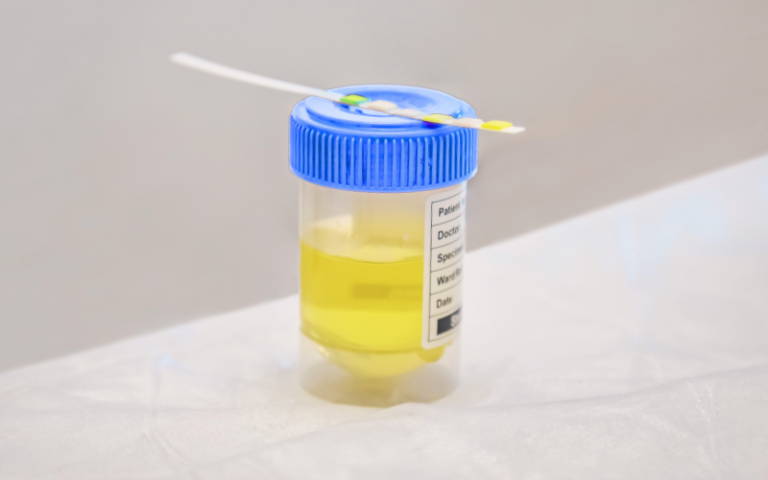
Before switching to fingerprint drug testing, Precision Stevedores relied on urine testing. While widely used, it created operational and cultural challenges.
“When we were testing with urine, the test was checking for twelve or sixteen different drugs. But four or five of the same drugs were coming up all the time.”
This prompted a reassessment of whether broader panels were genuinely improving safety.
“It is risk based more than anything else. Do we need to test for a particular drug that we have never seen in ten years of testing?”
Improving Engagement With a Non-Invasive Drug Test
While urine testing was widely accepted as an industry standard, it created practical and cultural challenges for Phil and his team. Testing disrupted shifts and created resistance among employees and managers alike.
“When we were still doing urine testing, the engagement was not really as good. It is not a pleasant experience. Managers knew that they were going to lose their people for a period of time.”
The move to fingerprint sweat testing changed that dynamic.
“The change to fingerprint sweat drug testing meant that people were a bit more open to doing it. Now, when people are pulled in for a drug and alcohol test, there is not that resistance anymore.”
As a non-invasive drug test, fingerprint sweat testing removed many of the barriers associated with traditional drug test kits. It allowed workplace drug screening to take place quickly, discreetly, and without pulling people away from operations for extended periods.
“It took about six months to really get the organisation up to speed and instil the confidence to start doing the testing.”
Once embedded, testing became part of normal operations rather than a disruptive event.
Clear Rules, Fair Outcomes, and Early Support
Precision Stevedores operates a zero-tolerance approach to drug and alcohol testing failures, consistent with safety-critical industry expectations. However, the policy also clearly distinguishes between support and enforcement.
“If someone comes forward with any issues with drug or drink in advance of being selected for testing, we will work with them to try and resolve the issue. We would not dismiss them if they came forward.”
Roles are reviewed, support is provided, and confidentiality is maintained. This approach encourages early disclosure and reinforces the policy’s purpose of preventing harm. However, once testing selection occurs, expectations are clear.
“If someone is selected either by random or after they have had an accident, that option to come forward may be too late. If a test returns positive, staff are aware that this will lead to a disciplinary hearing, and dismissal could be the outcome.”
The process itself is structured and consistent.
“If it is non-negative, we send it to the lab for confirmation. The donor is suspended on pay until the results come back. If it is negative, they return to work. If it is confirmed positive, a disciplinary process follows.”
Since its implementation, the policy has delivered strong results.
“Since implementing our policy almost seven years ago, there has rarely been an event where someone involved in an accident has also failed a drugs test. The policy does its job well of being a deterrent.”
Introducing Testing Fairly and Transparently
Before testing began 7 years ago, Precision Stevedores gave employees the opportunity to come forward and have an open, honest conversation about safety with their staff.
“Before we actually implemented the policy, we gave everyone two weeks to come forward if they had problems with drug or drink. We worked with them, gave time off where needed, and kept everything confidential.”
Testing volumes were deliberately higher at the outset.
“At the beginning, we did as many as ten tests per month, then reduced to a more sustainable and standardised level. We wanted to make sure people were aware this policy exists, because they had not had routine workplace drug testing for many years.”
Why Intelligent Fingerprinting Works for Precision Stevedores
For a safety-critical employer like Precision Stevedores, drug testing must work operationally as well as procedurally, which is where Intelligent Fingerprinting delivers. Fingerprint drug testing is a non-invasive drug test that analyses sweat from the fingertips, removing the need for urine or saliva samples, supervised collection, or specialist facilities. Testing can take place on-site, with results available in about 10 minutes. This provides HR and operational leaders with immediate, actionable information and enables fitness-for-duty decisions to be made without delay or unnecessary disruption.
Just as importantly, fingerprint sweat testing focuses on recent drug use rather than historical behaviour. For Precision Stevedores, this aligns directly with the purpose of workplace drug testing: identifying current impairment risk in safety-critical roles, not policing past conduct.
Intelligent Fingerprinting also supports best practices beyond the test itself. The team works closely with HR throughout implementation, onboarding, and ongoing training. This helps align drug testing procedures with each workplace’s drug testing policy and supports stakeholder and union engagement. For Precision Stevedores, this combination of dignity, speed, operational fit, and structured support has made employee drug testing a practical, accepted part of their safety culture. For other HR leaders, it provides a clear model for implementing workplace drug testing that protects people, supports operations, and builds trust from the outset.
From Policy to Practice
Precision Stevedores’ experience shows that effective drug and alcohol testing does not rely on heavy-handed enforcement. It relies on clarity, fairness, and a realistic understanding of risk.
By implementing a clear workplace drug testing policy, selecting a non-invasive drug test, and integrating testing into everyday operations, the business strengthened safety without undermining trust or productivity.
For HR leaders, the lesson is simple. When employee drug testing is designed properly, it becomes a visible part of a mature safety culture rather than a source of resistance.
Learn More
For HR teams looking to go deeper, our white paper, HR’s Guide to Workplace Drug Testing, provides detailed guidance on policy design, legal considerations, and best practices for safety-critical environments.
To see how fingerprint drug testing could work in your organisation, book a demo and speak with our team about implementing workplace drug testing in a way that protects people, supports operations, and stands up to scrutiny.