Why Legally Defensible Drug and Alcohol Policies Matter for UK Employers
When drug and alcohol risks are not adequately managed, the consequences can be severe. Employees can be seriously injured or killed, and organisations can face substantial financial penalties, regulatory investigations, legal action, and long-term damage to their reputation. A single impairment-related incident is often enough to trigger years of scrutiny, significant legal fees, and massive operational disruption.
When an incident occurs, regulators investigate whether employers identified impairment risks and consistently enforced their drug and alcohol policy. If those steps cannot be evidenced, the organisation may be found in breach of its duties under UK health and safety law. One of the strongest ways to evidence risk management is through a clear, enforceable, and well-documented drug and alcohol policy.
For HR, Health and Safety, and Environment (HSE), and compliance leaders, the question is not simply whether a policy exists, but whether it would stand up to investigation. This blog explores why policies fail, how testing choice affects defensibility, and the legal responsibilities employers must consider.
Why Drug and Alcohol Policies Fail
A drug and alcohol policy can appear comprehensive on paper, but collapse as soon as regulators, insurers, or a tribunal examine it. The most common weaknesses include:
- Vague definitions that leave room for interpretation
- Inconsistent enforcement across sites, teams, or managers
- Procedures that are written down but not followed in practice
Charlotte Le Mair, founder and partner at LMP Legal, summarises it concisely:
“Policies fail because they are either not there, not good enough, or not implemented all the way through.”
A policy that exists but is not enforced is just as risky as having no policy at all. “On-the-shelf” policies that look thorough but are never applied offer no protection. When a serious incident occurs, regulators do not examine how well-written the policy is. They look for consistent practice and a documented audit trail, including testing records, decision records, training records, and any actions taken.
What Effective Documentation Needs to Look Like
A defensible drug and alcohol policy must be supported by documentation that is complete, consistent, and aligned with the organisation’s practices.
- Accurate and Complete: Records must clearly reflect what happened and when it happened. Investigators expect to see a continuous record of drug and alcohol test activity, including:
- Random testing schedules
- Pre-employment testing
- For-cause and post-incident tests
- Chain-of-custody documentation
- Notes on refusals or breaches
- Evidence of employee communication and training
- Consistently Maintained and Easily Auditable: Gaps in documentation are viewed as gaps in enforcement. Regulators often assume that if something is not recorded, it did not happen. Documentation must be organised and centralised, not scattered across handwritten notes, multiple spreadsheets, or disconnected systems.
- Linked Back to Policy: Documentation must follow the exact testing triggers and procedures outlined in the written policy. If the process differs in practice, regulators will treat the policy as unenforced.
Employer’s Legal Obligation Under UK Law
Under the Health and Safety at Work etc. Act 1974 (HSWA), employers must take all reasonably practicable steps to protect:
- Employees (Section 2)
- Anyone affected by their work, including contractors, visitors, and members of the public (Section 3)
Failing to implement or enforce a drug and alcohol policy in a safety-critical environment can be considered a breach of these responsibilities if an impairment-related incident occurs.
Charlotte notes that expectations are likely to increase:
“At the moment, random testing isn’t mandatory. However, the Department for Transport released a report in 2024 suggesting drug and alcohol testing regimes should become mandatory for all commercial operators. I can only see it going one way.”
Industry-Specific Requirements in the UK
Some industries already require mandatory drug and alcohol testing. Others strongly recommend it as part of wider safety management systems.
Sector Regulator / Law Compliance Expectation
| Sector | Regulator / Law | Compliance Expectation |
|---|---|---|
| Rail | Railways and Transport Safety Act 2003, Part 4 | Mandatory testing for safety-critical staff |
| Aviation | Civil Aviation Authority / Air Navigation Order 2016 | Mandatory testing and drug and alcohol management programmes |
| Maritime | Railways and Transport Safety Act 2003, Part 5 | Mandatory testing for shipmasters and crew |
| Road Transport | DfT / Traffic Commissioners | Expected policy and testing under Operator Licensing |
| Energy/Utilities | HSE / COMAH Regulations | Required as part of safety management systems |
Across these sectors, regulators expect employers to identify impairment risks and consistently enforce safety measures proactively.
Why Testing Methods Matter for Legal Defensibility
If an employer or auditor cannot trust the validity of a test, the result is of little value in an investigation. An unreliable, inconsistently applied, or easily tampered-with workplace drug test can undermine an otherwise strong policy. For example:
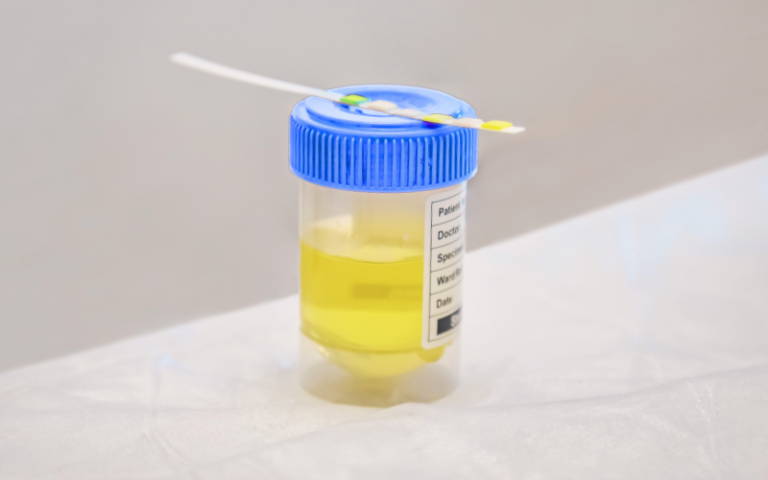
- Urine drug tests can be cheated by individuals substituting their urine for another sample or by adulterating the test with chemicals that interfere with the result.
- A saliva drug test can yield inconsistent results, particularly if collection is not properly supervised.
How Fingerprint Drug Testing Strengthens Workplace Testing
Regulators assess what the organisation can prove. Fingerprint drug testing helps employers demonstrate consistent processes, reliable documentation, and tamper-resistant sample collection.
Stronger Documentation
The Intelligent Fingerprinting Drug Screening Reader automatically stores:
- Unique donor ID
- Timestamp
- Overall test result
- Per-drug outcomes
- Up to 300 test results in a secure archive
This produces an auditable digital record suitable for internal audits, operator licence checks, and HSE investigations.
Faster Decision-Making and Reduced Risk
Immediate results support informed decisions about fitness for duty. When used with consistent chain-of-custody procedures, a fingerprint drug test helps employers reduce legal disputes and enforce their drug and alcohol policy with confidence.
Tamper-Resistant Collection
Individuals can manipulate traditional methods, thereby weakening their legal defensibility. However, a fingerprint drug test eliminates the opportunity for substitution or adulteration. The donor places their finger on the Cartridge, which is fully observable and removes any chance of substitution or adulteration.
This gives employers confidence that:
- Results are genuine
- The correct person provided the sample
- The process is transparent and reliable
Legally Defensible UK Policy
A legally defensible drug and alcohol policy is essential for protecting your workforce, meeting your legal obligations, and reducing organisational risk. Without consistent enforcement and accurate documentation, a policy becomes vulnerable during an investigation and can leave your business exposed to financial penalties and reputational damage.
To continue strengthening your approach, download our full white paper for detailed guidance, practical checklists, and insights for HR, HSE, and compliance teams. If you would like to understand how fingerprint drug testing supports policy enforcement and improves legal defensibility, you can contact us to arrange a demo and see the Intelligent Fingerprinting system in practice.