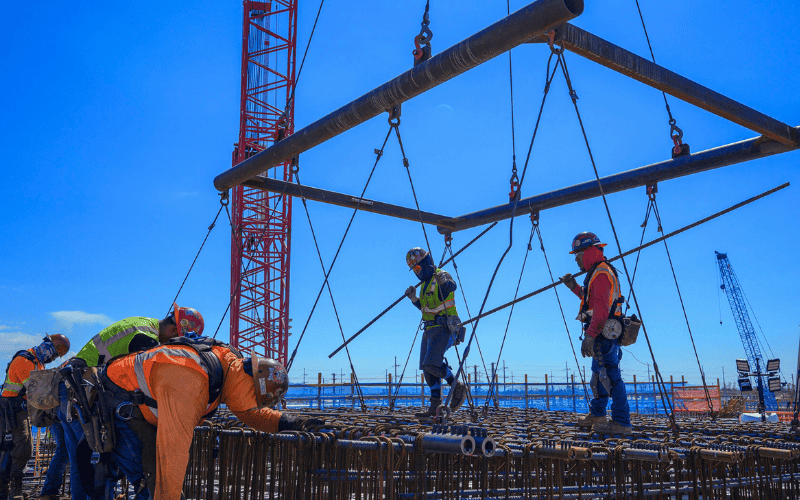
The UK government has launched a new £4 million research and development “innovation challenge” aimed at cutting construction costs and speeding up project delivery by harnessing modern construction methods, digitisation, and industrialised processes. The initiative forms part of a wider R&D Missions Accelerator Programme, with the aim of delivering measurable savings and efficiency improvements across the public sector by 2030. This shift presents a key opportunity for construction professionals to align with industry evolution. Expect increased pressure to adopt cutting-edge technologies, adapt to digital workflows, and remain compliant with new cost-saving legislation and regulations. This is also a cultural shift where embracing innovation becomes a competitive advantage for businesses.
This is an exciting development for an industry that has long been grappling with cost pressures and productivity challenges. With projected increases in build costs, such as forecasts suggesting residential construction costs could climb between 8 % and 15 %, depending on project complexity, innovation in process and technology adoption has never been more important. Construction costs across key sectors have surged, with material prices such as timber up 28% over the past 18 months and fuel prices pushing up operating costs. These rising costs amplify the need for modernisation. With rising expenses across all areas of construction, such as:
| Material/Cost | Increase in the Past Year |
|---|---|
| Timber (softwood) | +28% |
| Fuel (diesel) | +21% |
| Cement | +14% |
To combat these challenges, embracing modernisation through digital and industrialised processes seems to no longer be optional.
The UK construction sector experiences significant health and safety burdens each year, with tens of thousands of injuries and ill-health cases and an estimated £1 billion+ in injury-related costs annually. Broader workplace harm across all industries, including construction, costs the UK economy around £22.9 billion in 2023/24, reflecting both human and economic impacts of unsafe working environments. As construction costs rise, so does the financial strain of health and safety concerns. But cutting costs doesn’t have to mean compromising on safety or employee wellbeing.
Reducing construction costs does not have to mean accepting higher risk or diluted safety standards. On the contrary, smarter digital solutions can drive both cost efficiency and improved safety outcomes. Modern, scalable technologies such as non-invasive fingerprint sweat drug testing embed directly into safety systems and operations without adding unnecessary complexity or disruption. Fingerprint drug testing not only improves safety measures but also enhances overall efficiency, saving time and cutting unnecessary operational disruptions.
Unlike traditional methods such as urine or saliva testing, which require dedicated facilities and can disrupt workflow, fingerprint drug testing delivers results on-site in minutes. This provides HR and operational leaders with immediate, actionable information and supports fitness-for-duty decisions without protracted turnaround times. By integrating such technologies with existing safety and compliance frameworks, organisations can improve labour efficiency, reduce administrative burden, and demonstrate stronger risk control, all while protecting people and productivity. This solution fits seamlessly into the industry’s overall drive toward digitalisation, helping organisations stay compliant, save time, and remain competitive.
Government action that champions innovation reflects a broader shift in the construction sector toward digitisation, data-driven processes, and tech-enabled risk management. For organisations also seeking to modernise their approach to health and safety and operational effectiveness, solutions like Intelligent Fingerprinting represent one element of a more agile, efficient, and safer future workplace.
The UK government’s £4 million R&D challenge signals an exciting time for the construction industry to innovate. For businesses looking to modernise their health and safety and overall operational efficiency, adopting solutions like Intelligent Fingerprinting offers a clear path to achieving both. Contact us today for a demo to see how Intelligent Fingerprinting can seamlessly integrate with your health and safety protocols, improve operational efficiency, and contribute to a more productive, safer, and cost-effective workplace.