Does workplace drug testing affect staff retention? It can.
An intrusive, heavy-handed approach to drug testing at work can quietly push good employees towards the door. People do not forget an experience that felt invasive or accusatory, and for a skilled worker with options, that is one more reason to look elsewhere.
This article looks at why losing trained staff is so expensive, how the testing experience shapes whether people stay, and what a retention-friendly workplace drug and alcohol testing programme looks like.
How Much Does Losing a Skilled Employee Cost?
The cost of replacing a good employee goes far beyond the advert. Industry estimates put the cost of filling a single UK vacancy in the thousands once you count advertising, agency fees and internal time, and those costs rise sharply for skilled or senior roles.
The recruitment fee is only the start. A new hire takes time to become fully productive; research suggests around eight weeks before they are up to speed, and training someone to genuine proficiency is a sustained investment on top of the hire itself.
That investment is hardest to replace where it matters most. The UK faces an acute skills shortage: the Recruitment and Employment Confederation estimates that labour and skills shortages could cost the economy as much as £39 billion a year. In construction, the pressure is sharper still: in the Federation of Master Builders and Chartered Institute of Building State of Trade Survey, 72 per cent of small and medium-sized firms reported being affected by skilled-labour shortages in the second half of 2025. In that climate, losing an experienced worker is not a minor inconvenience; it is the loss of an asset that takes months and real money to rebuild.
Does Drug Testing Affect Staff Retention?
Staff who feel policed, distrusted or treated as suspects are more likely to leave.
The clearest evidence comes from research into workplace monitoring, where nearly half of employees say they would consider leaving if monitoring increased. Workplace drug testing sits at the more intrusive end of that spectrum: a supervised urine or saliva collection is a far more personal experience than a monitored screen, so there is little reason to expect the effect on how valued people feel to be any smaller.
Traditional methods make this worse than it needs to be. Supervised urine and saliva collection often means restricted facilities, waiting around, and a process that can feel awkward and accusatory. People do not forget how that felt, and for a skilled worker with options, it is one more reason to look elsewhere. The testing experience is not a soft, HR-only consideration; it directly affects whether the people you have invested in choose to stay.
Download The Business Case for Workplace Drug Testing here.Finding this useful? The full case, with the numbers behind every return, is in our white paper. |
How Dignified Drug Testing Protects Your Best People
The good news is that retention risk is largely in your control because it depends on the workplace drug and alcohol testing method you choose and how you run the programme.
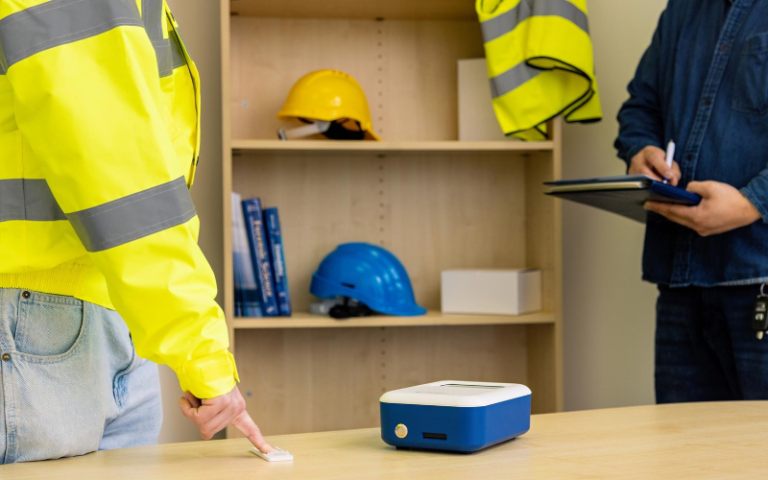
A dignified, non-invasive approach removes most of what makes testing feel like an ordeal. Fingerprint drug testing, for example, uses a simple sweat sample from the fingertips, with no supervised collection, no restricted facilities and no biohazard handling. This dignified, non-invasive collection protects the trust that keeps good people in post.
Just as important is what the programme focuses on. A method built around recent use, rather than someone’s lifestyle outside work, keeps testing proportionate. It signals that the aim is a safe workplace, not surveillance of private life; that distinction reassures a valued employee that a policy is about safety, not suspicion.
What a Retention-Friendly Drug Testing Policy Looks Like
Protecting your people and running a credible programme don’t conflict. A retention-friendly drug and alcohol policy tends to share a few features:
- A dignified, non-invasive method that spares staff the discomfort of supervised collection.
- A clear, consistent policy applied fairly from top to bottom, so no one feels singled out.
- A focus on recent use rather than private life, with a non-negative screening result treated as a prompt for confirmatory analysis, not a verdict.
- Open communication, so employees understand why the programme exists and how it works.
Handled this way, workplace drug testing stops being something done to your workforce and becomes part of a safety culture people can trust.
Drug Testing and Staff Retention: The Bottom Line
Does workplace drug testing affect staff retention? It can. The skills you have built are too expensive to put at risk over an intrusive process, and a dignified, well-run programme protects both your workforce and the investment they represent.
Our white paper explains how a dignified programme protects your people and delivers three other returns, with the numbers behind each. Download The Business Case for Workplace Drug Testing. Prefer to see it in practice? Contact us for a demo, and we will show you how fingerprint drug testing supports a programme good people can trust.