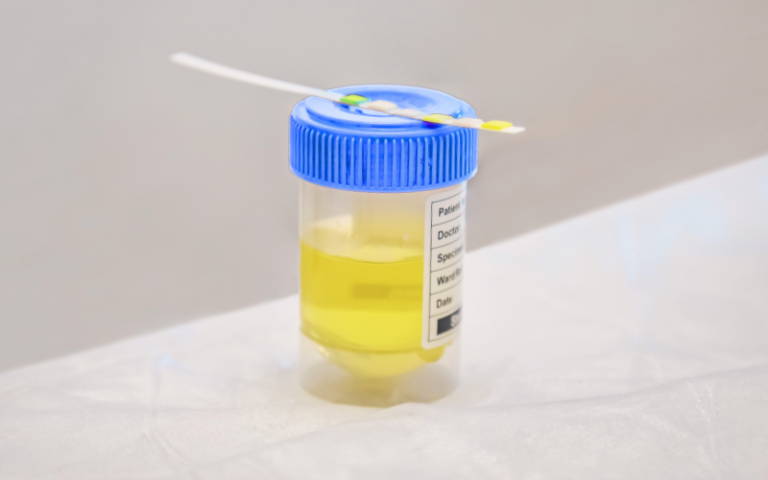
Urine drug testing is a method many employers choose to support their drug and alcohol testing programmes, often assuming it is the most reliable and cost-effective option. This blog explores the strengths and limitations of urine drug testing to help organisations make informed decisions about their workplace drug testing programmes.
Below are five common myths about urine drug testing, along with what the science and practical experience show.
“Urine Testing Detects Every Drug, Which Makes it Better.”
Myth. Testing for a wider range of substances does not necessarily make a drug testing programme better.
Most workplace drug testing focuses on common substances such as cannabis, cocaine, opiates, and amphetamines.
Testing for a large number of substances that are rarely encountered in the workplace can increase complexity without providing additional safety-critical information. Effective drug testing programmes typically focus on substances that are most likely to appear in the workforce, and that may present a safety risk.
“Urine Testing Detects Drug Use Further Back in Time, Which Makes it Better.”
Myth. Detecting drug use further back does not always yield relevant day-of safety information.
Urine drug tests detect metabolites that are excreted after the body processes a drug. Because these metabolites can remain detectable for several days, urine testing may reveal historical drug exposure rather than recent use.
For employers concerned with day-of testing fitness-for-duty, this longer detection window can make it more difficult to determine whether a result reflects recent drug use or past exposure. For organisations that require strict zero-tolerance lifestyle testing, methods such as hair or blood testing are often preferred as they are designed to identify longer-term drug exposure rather than recent use.
“Urine Testing is Cheaper for Employers.”
Myth. While a single urine test may seem less expensive, total programme costs include additional operational factors.
Urine testing typically requires dedicated facilities, supervised collection, and time away from work to provide the sample. These steps can increase labour costs and downtime for both the employee and staff administering the test.
When you factor in operational costs, the total cost of urine-based drug testing may exceed initial expectations.
“Urine Testing is the Most Reliable and Accurate Drug Testing Option.”
Myth. No single drug testing method is inherently more reliable than another. Urine, saliva, and fingerprint drug testing all rely on established scientific screening techniques and can provide accurate results when used correctly.
Urine, saliva, and fingerprint drug tests use immunoassay screening technology, which detects drugs or their metabolites by binding them with antibodies. If a screening result is non-negative, it can be confirmed using highly specific laboratory techniques such as liquid chromatography–mass spectrometry.
“Urine Drug Tests Are the Easiest to Cheat or Adulterate.”
Partly True. Employers and test administrators take several steps to protect the integrity of urine drug testing, including supervised collection procedures, controlled collection environments, and strict chain-of-custody documentation. However, because urine samples are typically collected in private, it is not always possible to observe every stage of the collection process. This can create opportunities for individuals to attempt dilution, substitution, or other forms of sample tampering.
Urine testing programmes often require extra safeguards to ensure sample integrity.
Urine Drug Testing Vs Fingerprint Drug Testing
Modern drug testing methods, such as fingerprint-based sweat testing, help address many challenges that employers face with urine testing, making drug screening simpler, faster, and more secure for the workplace.
Fingerprint drug tests are non-invasive and analyse trace amounts of drugs and metabolites in fingertip sweat. Collection involves pressing fingertips onto a cartridge, then analysing it with a portable reader.
Because samples are collected directly from hands, fingerprint testing saves time, is hygienic, and eliminates the need for special facilities. This benefits organisations by reducing setup time, labour demands, and invasive procedures, while also improving test security by making collection fully observable.
Like urine tests, fingerprint drug tests use immunoassay screening technology. Fingerprint drug tests detect use within 16-24 hours, focus on recent exposure, and provide clearer insight into fitness-for-duty.
For safety-critical organisations, fingerprint testing offers quick, efficient, and scientifically reliable drug screening. This helps maintain workplace safety while minimising disruption and administrative burden.
See How Fingerprint Drug Testing Works
Selecting a drug testing method depends on the operational setting, programme goals, and the types of drug exposure you need to identify.
Schedule a demo with Intelligent Fingerprinting to learn how fingerprint drug testing can enhance your workplace drug testing programme by improving efficiency, reducing costs, and increasing peace of mind for your team.